
After a hailstorm hits a neighborhood, the pressure shows up fast. Homeowners want direction, carriers need triage, and adjusters need enough usable information to decide which files can move from a desk and which ones need boots on the ground.
That is why the virtual claim adjuster has become a practical part of property claims handling. It gives carriers a way to open the file with photos, video, policyholder interviews, and early documentation instead of waiting for every loss to start with an on-site visit. For straightforward claims, that can shorten cycle time and improve communication early in the process.
The better view is to treat virtual adjusting as the coordination point, not the whole solution. A desk adjuster can review incoming evidence, set scope expectations, and identify the files that need specialized field support because of steep roofs, unsafe access, disputed cause, or damage that cannot be evaluated well through a phone camera. In those cases, reliable field inspection partners still carry real weight, especially when the job calls for site conditions that support accurate documentation, such as strong mobile signal coverage for remote property inspections.
Carriers get better capacity when they use virtual adjusting this way. Policyholders get faster contact. Field experts stay focused on the claims where in-person judgment changes the outcome. That collaborative model is where virtual adjusting works best.
The Modern Shift in Property Claims Adjusting
A hailstorm hits on a Thursday afternoon. By Friday morning, the carrier has hundreds of new property files open, policyholders want answers, and the field calendar is already tight. In that setting, the first question is not who can drive fastest. It is how to sort the claims quickly, make early contact, and decide which losses need an in-person inspection.
That pressure is what pushed property claims toward virtual adjusting. The old model of sending a person to every address first can still work on individual files, but it strains under catastrophe volume, rural travel, access issues, and staffing gaps. Every hour spent on the road is an hour not spent reviewing coverage, documenting damage, or setting expectations with the insured.
The practical goal is to remove wasted motion from the opening stage of the claim while preserving adjuster judgment. Carriers gain speed when desk and virtual teams can review photos, conduct live video walkthroughs, gather statements, and flag complexity before assigning field resources. That approach works best when virtual adjusting serves as the intake and coordination hub, not as a blanket substitute for field work.
That distinction matters.
A straightforward interior water loss may move efficiently with remote documentation and a prompt estimate review. A steep roof, questionable cause of loss, limited visibility, or unsafe site conditions usually calls for an experienced field inspector. Strong programs are built to recognize that line early and hand the file to the right partner before the claim drifts.
Operational details also decide whether virtual handling succeeds. Live video is only useful if the connection holds, the policyholder can follow direction, and the adjuster can capture usable documentation in real time. That is why carriers and inspection partners pay attention to practical field support, including tools that improve connectivity during remote inspections, such as a phone signal booster for remote property inspection work.
Used well, virtual adjusting gives carriers better triage, earlier communication, and more disciplined use of field capacity. It does not remove the need for boots on the ground. It helps reserve in-person expertise for the claims where site conditions, disputed facts, or technical damage assessment will change the outcome.
What Exactly Is a Virtual Claim Adjuster
A virtual claim adjuster is a licensed claims professional who investigates, documents, evaluates, and advances a claim remotely using digital tools. Think of the role like telehealth for property damage. The expertise is still human. The inspection method changes.
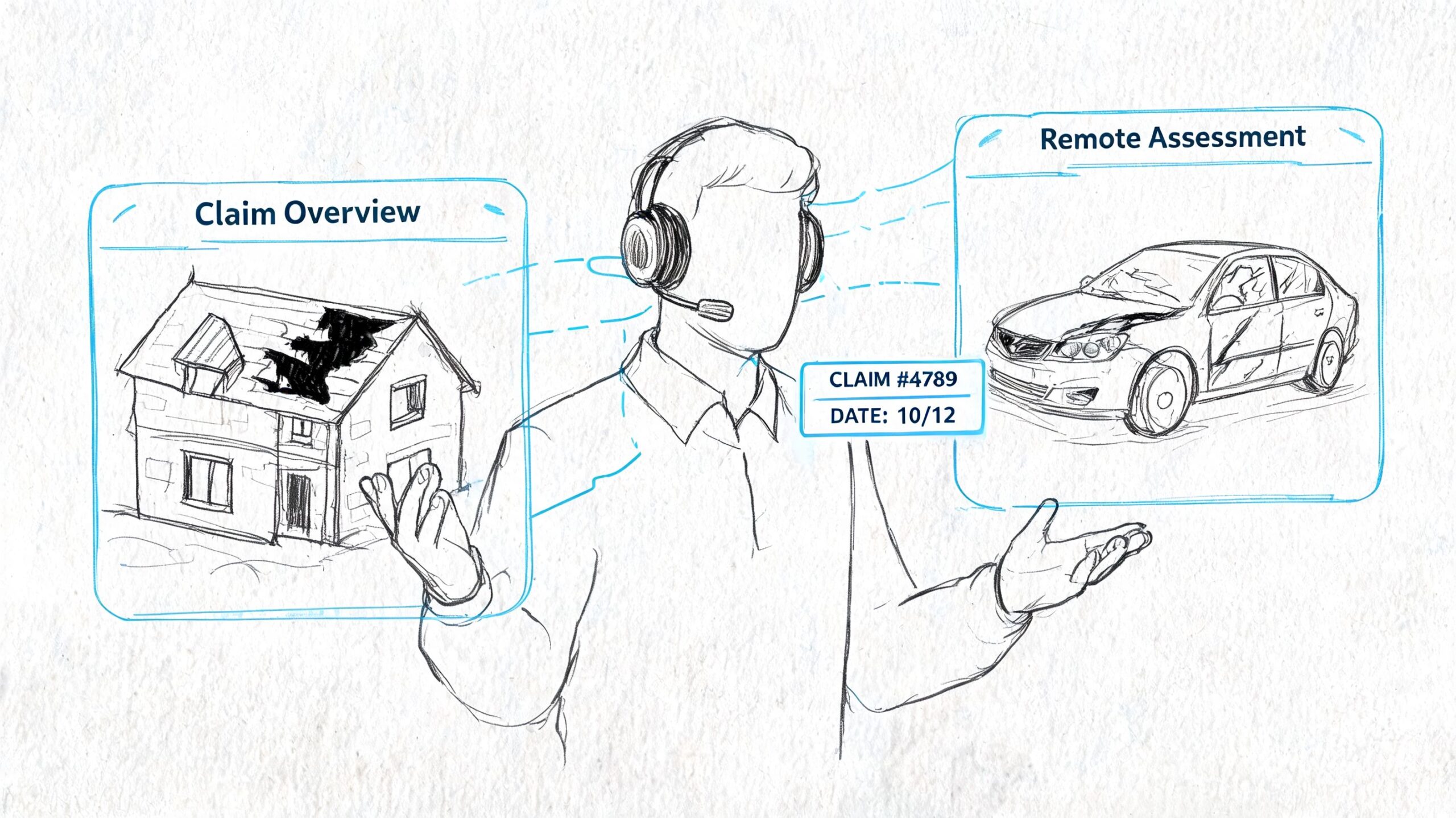
The confusion usually comes from mixing up three different functions:
- Desk adjuster: Reviews documents, coverage, estimates, and communications from an office setting.
- Field adjuster: Goes on site, inspects damage in person, takes measurements, and documents conditions directly.
- Virtual claim adjuster: Performs many of the investigative and inspection tasks remotely through live video, photo capture, policyholder-guided walkthroughs, platform-based documentation, and direct system integration.
What the role includes
A virtual claim adjuster isn’t just a person watching uploaded photos. In a well-run workflow, that adjuster is actively directing the inspection.
They may ask the policyholder to walk the exterior, zoom in on elevations, capture soffit or gutter damage, open interior rooms with visible staining, or hold a device steady while the adjuster records screenshots and notes. In some systems, the adjuster also captures measurements, verifies geo-tagged documentation, and pushes data into estimating or claim management platforms.
What it is not
It’s not a fully automated bot making settlement decisions with no human review. It’s also not the right answer for every loss.
The strongest virtual adjusters know when to stop relying on remote inputs and escalate. If the roof pitch is dangerous, if brittle shingles require tactile review, if structural movement is suspected, or if the insured can’t reasonably participate, remote handling reaches its limit fast.
A virtual workflow works best when the adjuster controls the process, not when the carrier simply asks the policyholder to upload a few random photos and hope they’re enough.
The human-in-the-loop difference
The best way to understand the role is this: a virtual claim adjuster is still adjusting the claim. Technology just extends reach.
That distinction matters because claim quality depends on judgment. Someone still has to separate cosmetic from functional damage, identify missing documentation, recognize when coverage questions need more investigation, and decide whether the file can close remotely or needs a field partner.
How a Virtual Claim is Processed Step by Step
Virtual claims move well when the workflow is disciplined. They break down when the carrier treats them like a loose photo exchange. The strongest process is structured from first notice through payment.
Step 1 intake and assignment
The file starts with FNOL, just like any other claim. Loss facts come in through a call center, portal, app, or agent handoff. From there, assignment matters.
According to GoodFirms coverage of Virtual Claims Adjuster software, advanced VCA platforms use a Claims Core engine with automated assignment algorithms that triage claims in minutes. The same source states that this approach can produce a 30% reduction in file handling costs by optimizing workloads and integrating directly with estimating platforms for real-time data flow.
That assignment logic is where virtual adjusting becomes operationally useful. Instead of manually sorting every file, the system can route straightforward losses toward remote handling first and reserve specialty resources for files that need more attention.
Step 2 policyholder preparation
Before the inspection, the insured needs clear instructions. Good programs send a link, explain what the session will cover, and tell the homeowner what to have ready. That usually means safe access to the damaged area, working phone battery, stable signal, and enough light to capture details.
This part sounds minor. It isn’t. A confusing setup creates weak documentation and repeat contacts.
A lot of remote success comes down to whether the person on site can maintain a stable connection between rooms, exterior elevations, and damaged components. In many environments, claims teams also rely on wireless accessories and connectivity support tools similar to a Bluetooth gateway antenna for universal wireless use to keep digital workflows moving smoothly.
Step 3 guided inspection and capture
During the live session, the adjuster leads. They don’t just observe.
A typical virtual inspection may include:
- Identity and location check so the file starts with the right property and the right claimant.
- Exterior scan of roofline, siding, windows, fencing, detached structures, and obvious impact points.
- Interior walkthrough for stains, ceiling collapse, wet materials, insulation exposure, or displaced contents.
- Targeted documentation through still shots, recorded clips, annotations, and measurements where the platform allows it.
Step 4 estimating review and settlement movement
Once the documentation is captured, the claim moves into estimate review, coverage analysis, and settlement handling. The biggest operational gain comes when the same file data feeds directly into estimating software instead of forcing duplicate entry.
The virtual inspection is only half the job. The real gain appears when photos, notes, measurements, and estimate inputs flow into one claim record without rework.
If the documentation is sufficient, the desk team can write, review, and issue next steps quickly. If it isn’t, the file should escalate immediately instead of bouncing through another round of avoidable delay.
Virtual Adjusting vs Traditional On-Site Inspections
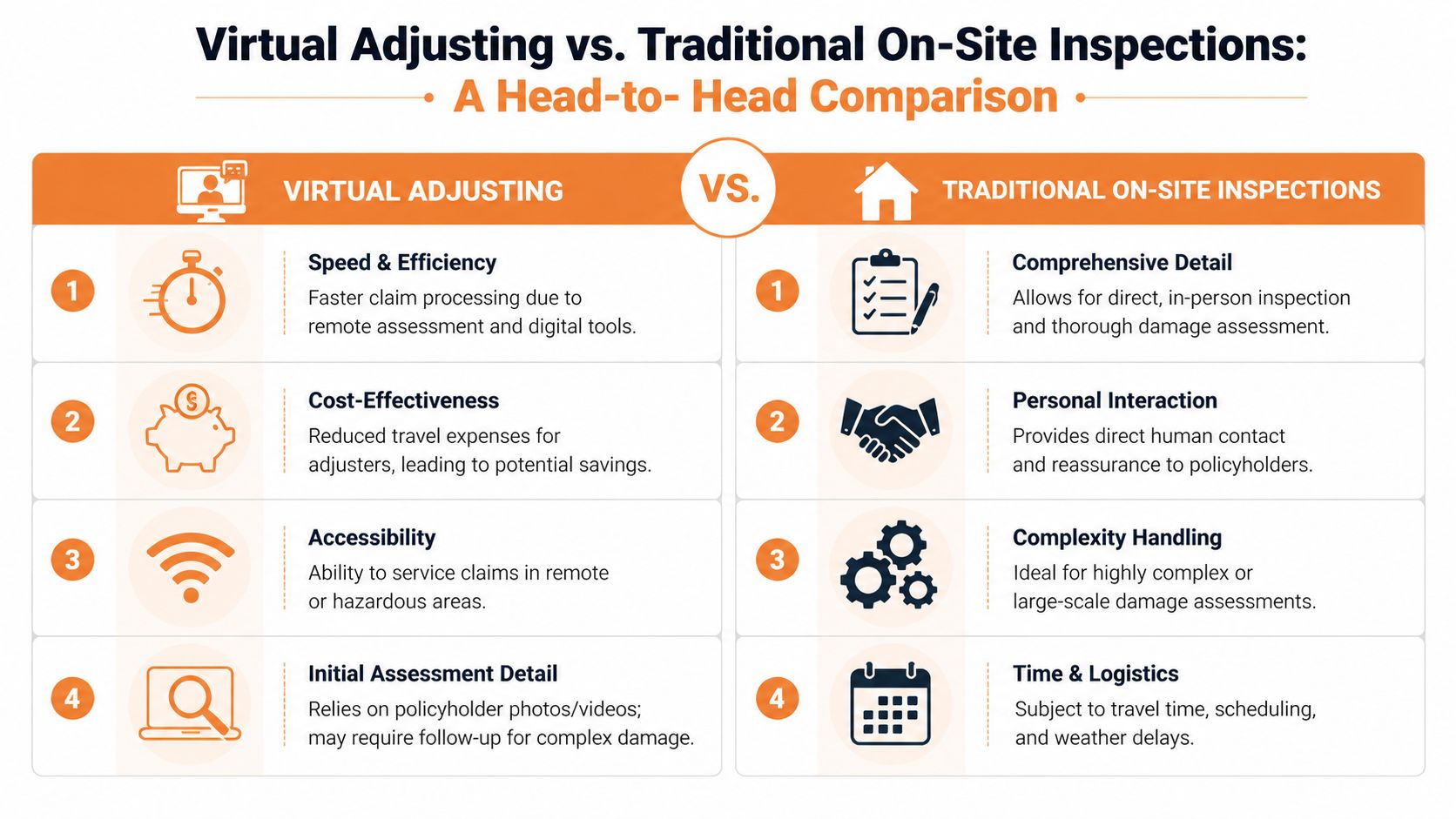
Virtual adjusting and field inspections aren’t enemies. They answer different operational needs. The mistake is treating one as universally better.
Where virtual adjusting wins
Remote handling is strongest when the loss is visible, the insured can participate, and the file needs speed more than physical access. That includes many basic wind, hail, water intrusion, and minor exterior damage claims.
It also helps when geography works against you. If the property is remote, roads are congested after a storm, or weather is delaying site visits, a virtual claim adjuster can often get the file moving while a traditional inspection queue is still building.
Where field inspection still wins
On-site work remains the better choice when the loss involves height, safety risk, limited visibility, structural complexity, disputed scope, or fragile materials. A steep roof is the obvious example. A high ladder assist or emergency mitigation scene is another.
A homeowner with a phone can show ceiling stains. They usually can’t safely inspect ridge cap displacement, soft decking, hidden punctures, flashing damage, or tree impact conditions from the roof surface itself.
Comparison table
| Metric | Virtual Adjusting | Traditional Field Adjusting |
|---|---|---|
| Speed | Fast first contact and faster early documentation | Slower when travel, weather, and route planning affect scheduling |
| Cost handling | Lower handling burden when remote documentation is sufficient | Higher operating burden when each inspection requires travel and physical deployment |
| Policyholder convenience | High, because the insured can participate from home and often avoid waiting for an in-person visit | Lower, because someone usually needs to be present for an appointment window |
| Damage complexity | Best for straightforward or moderately complex losses with clear visibility | Best for complex, hazardous, disputed, or access-limited losses |
| Data quality | Strong when the session is guided well and images are complete | Strongest when the inspector can physically verify conditions, materials, and safety concerns |
| Scalability during surge | Excellent for triage and volume control | Better reserved for files that truly need on-site expertise |
One practical issue often gets overlooked. Materials and environmental conditions can hide damage from a remote lens. Insulation, ventilation paths, decking movement, and roof access challenges aren’t always clear from phone footage alone. That’s why claim teams still think in terms of building assemblies and site conditions, including products and systems such as commercial-grade radiant barrier insulation that affect what an inspector may need to verify in person.
If a remote inspection leaves unanswered questions about safety, scope, or cause, the cheapest move is usually a fast field inspection. The expensive move is pretending the uncertainty isn’t there.
Bridging the Gap The Role of Field Inspection Partners
The best claims organizations don’t ask whether virtual or field is better. They decide which part of the claim belongs to each.
That’s where the hybrid model earns its keep. A virtual claim adjuster acts like the control point. The adjuster reviews intake, starts documentation, identifies what’s clear, and then dispatches specialized field support only where the file needs it.
Claims that should trigger field support
Some losses tell you early that remote handling won’t be enough. The common examples are familiar to anyone who has worked property claims:
- Steep or tall roofs: Safety and visibility issues make remote-only review unreliable.
- Tree impact and structural questions: The file may need close-condition photography, measurements, and hazard awareness.
- Emergency conditions: Tarping, temporary repairs, and mitigation documentation require physical presence.
- Limited policyholder participation: Not every insured can climb, film, move through debris, or follow inspection prompts comfortably.
The value of a field inspection partner isn’t just labor. It’s focused skill at the exact point where remote handling reaches its natural edge.
Why collaboration works better than replacement
According to Strada’s glossary entry on virtual claims adjusting, virtual claims can reduce processing times from days to hours, and pairing a remote adjuster with on-site inspection services allows carriers to handle 20+ virtual assessments per day while cutting overall cycle times by 50-70% for complex damage scenarios that need expert validation.
That aligns with what experienced claim handlers already know. Remote is excellent for intake, triage, simple documentation, status communication, and many straightforward scopes. Field expertise becomes indispensable when the claim turns technical, hazardous, or disputed.
The practical handoff
A clean hybrid workflow usually looks like this:
- Remote adjuster starts the file and identifies gaps.
- Field partner receives a focused assignment, not a vague request to “look around.”
- On-site documentation returns fast with clear photos, notes, and condition reporting.
- Desk or virtual adjuster closes the loop by validating scope, writing estimate, and moving payment or next action.
That model prevents duplicate work. It also keeps licensed adjusters in decision-making roles while letting trained inspectors handle access-heavy documentation tasks safely and efficiently.
Implementing a Successful Virtual Adjusting Program
Most virtual adjusting programs fail for ordinary reasons. The carrier buys software, assumes adoption will follow, and then wonders why files still bounce between teams. The model works when operations, training, and field escalation rules are built together.
Build the workflow before you scale it
Start with claim selection. Decide which files are eligible for virtual-first handling and which files should go straight to on-site review. If those rules are fuzzy, adjusters improvise, and inconsistency takes over.
A useful rollout checklist looks like this:
- Define claim types clearly: Separate simple weather losses from steep-roof, structural, commercial, or emergency files.
- Standardize documentation requirements: Every remote inspection should collect the same essential categories of photos, video, statements, and notes.
- Map escalation triggers: Set clear rules for when a file moves from virtual to field support.
Train for communication, not just software
Claims leaders often over-focus on the platform and under-train the adjuster. A virtual claim adjuster needs to know how to direct a homeowner through the inspection, recover when the session gets disorganized, and recognize weak evidence in real time.
Training should include:
- Live inspection coaching: Adjusters need scripts and practice, not just a login.
- Policyholder instructions: Short pre-visit guidance reduces failed sessions.
- Quality review: Supervisors should audit file completeness, estimate accuracy, and escalation timing.
Teams also need practical support around remote work environments, equipment hygiene, and incident-response readiness. Even adjacent operational details matter in a distributed claims setting, whether that means home office setup or supplies such as HEPA vacuum bags for cleaner air in remediation-sensitive environments.
Field note: Don’t measure success by how many claims stay virtual. Measure success by how quickly the right claims move to the right resource.
Choose partners early
If the field network is an afterthought, the handoff will be slow when volume hits. Vet field inspection partners before storm season, define report expectations, and make sure your desk staff knows exactly how to assign them.
The strongest programs treat field support as part of the operating model, not as a backup plan when the remote file goes sideways.
A Homeowners Guide to the Virtual Claims Process
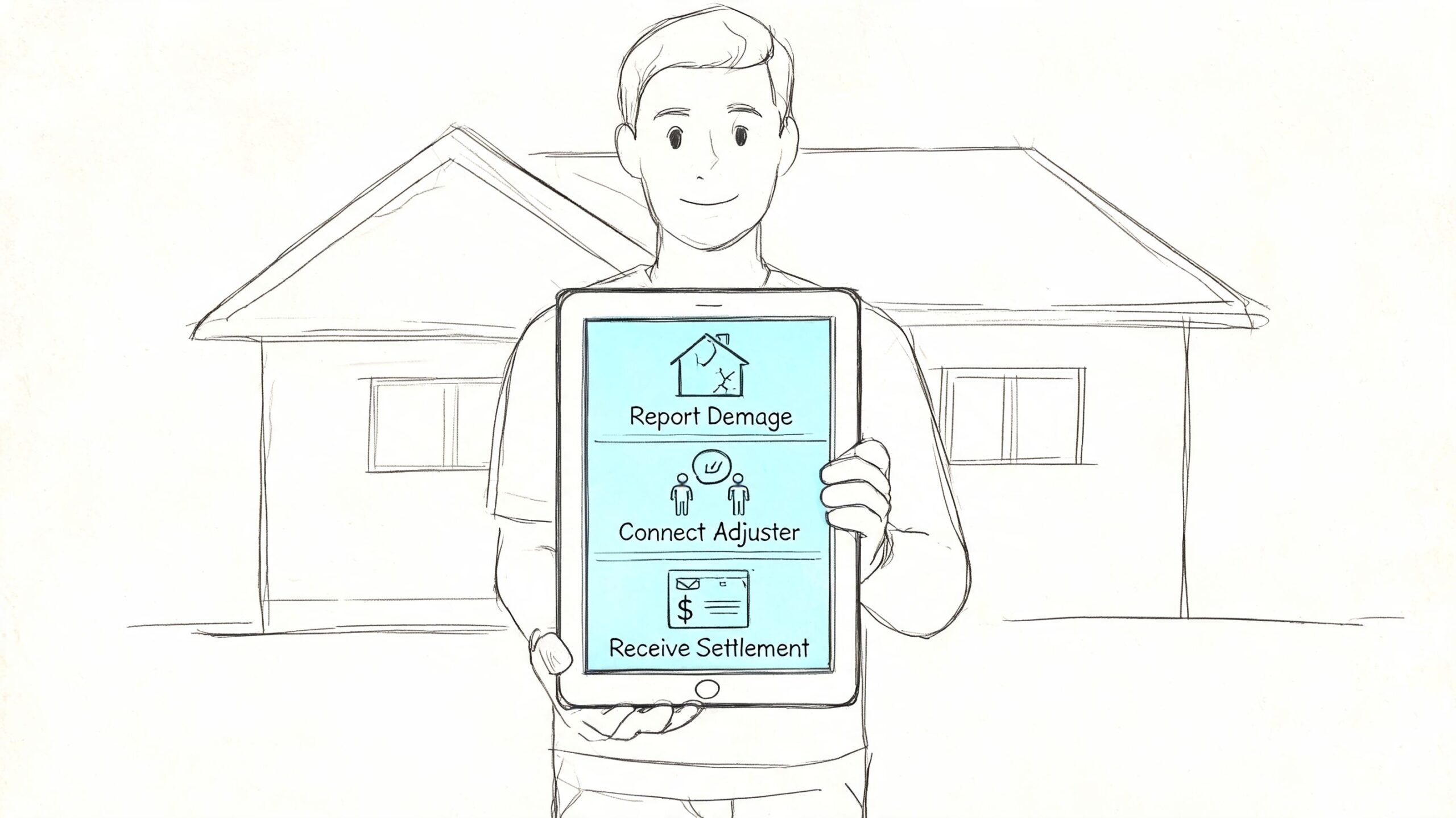
If your insurer assigns a virtual claim adjuster, it usually means they’re trying to start your claim faster. That’s good news. You may be able to document the damage, answer questions, and move the file ahead without waiting days for an in-person appointment.
What to expect during the inspection
The adjuster will usually send a link or give you instructions for a phone-based inspection. They may ask you to walk around the outside of the home, show specific damaged rooms, and pause while they capture screenshots or ask follow-up questions.
You won’t be expected to make technical decisions. Your job is to help them see the property clearly and safely.
How to make the session go smoothly
A few simple steps help a lot:
- Charge your phone first: A long inspection can drain the battery faster than expected.
- Turn on lights and open curtains: Better lighting means better documentation.
- Move carefully: Don’t climb roofs, unstable stairs, or debris piles just to get footage.
- Gather claim basics: Have your claim number, policy information, and any emergency repair receipts nearby.
If the adjuster decides the loss needs an in-person inspection, that doesn’t mean anything went wrong. It usually means the damage needs closer review or safer access than a phone video can provide.
For homeowners using smart devices to control access during emergency visits, property prep tools can also help, including items like a smart door lock with fingerprint keypad access when family schedules are chaotic after a loss.
You don’t need perfect footage. You need clear communication, safe movement, and a willingness to follow the adjuster’s instructions step by step.
The Future of Claims Is Collaborative and Connected
The future of property claims isn’t fully virtual, and it isn’t a return to sending someone on site for every loss. The better model is connected. A virtual claim adjuster starts the process, organizes the information, and moves the claim forward quickly. Field specialists step in where access, safety, complexity, or urgency demand a physical presence.
That approach helps everyone involved. Carriers control file flow better. Adjusters spend more time making decisions and less time burning hours on the road. Homeowners get faster contact and clearer next steps. Complex losses still receive the expert site review they deserve.
The fundamental shift is operational, not cosmetic. Virtual adjusting works best as a collaborative hub. It gives the desk side better visibility, gives the field side more targeted assignments, and reduces the waste that comes from treating every claim the same.
Claims quality still depends on people. Technology just lets those people work in a tighter, faster system.
When a claim needs more than remote review, Fox Claims Consultants LLC provides the on-site support that keeps complex property files moving. Their team handles steep and tall roof inspections, tree and storm damage assessments, ladder assist, emergency tarping, and rapid field reporting so carriers and adjusters get clear documentation from difficult, high-risk losses without losing time.
Leave a Reply