
A lot of claims now start with a roofing problem and turn into a systems problem.
A tree hits the structure. Wind opens part of the roof. Power fluctuates. The homeowner says the exterior cameras went offline, the smart lock stopped responding, the leak sensor never alerted, and the thermostat history might show when interior conditions changed. The adjuster is no longer looking at shingles, decking, and drywall alone. The adjuster is looking at a house with digital infrastructure woven into the loss.
That’s where smart home consultants matter. Not as gadget installers, but as specialists who can translate a connected home into something usable for inspection, documentation, scope review, and repair planning.
The New Reality of Property Claims in a Connected World
The old model was simpler. A damaged home had electrical, plumbing, HVAC, roofing, and finishes. Today, many homes also have networked cameras, app-based alarm systems, connected thermostats, voice assistants, lighting controls, smart plugs, garage controllers, and leak detection tied into a broader ecosystem. When weather or impact damage interrupts that ecosystem, the claim gets harder fast.
A failed smart device can create several problems at once. It can remove security from a vacant property. It can erase useful logs. It can leave a homeowner unable to control entry points or monitor temporary repairs. It can also create disagreement over whether the issue came from direct physical damage, a power event, network failure, improper setup, or pre-existing instability.
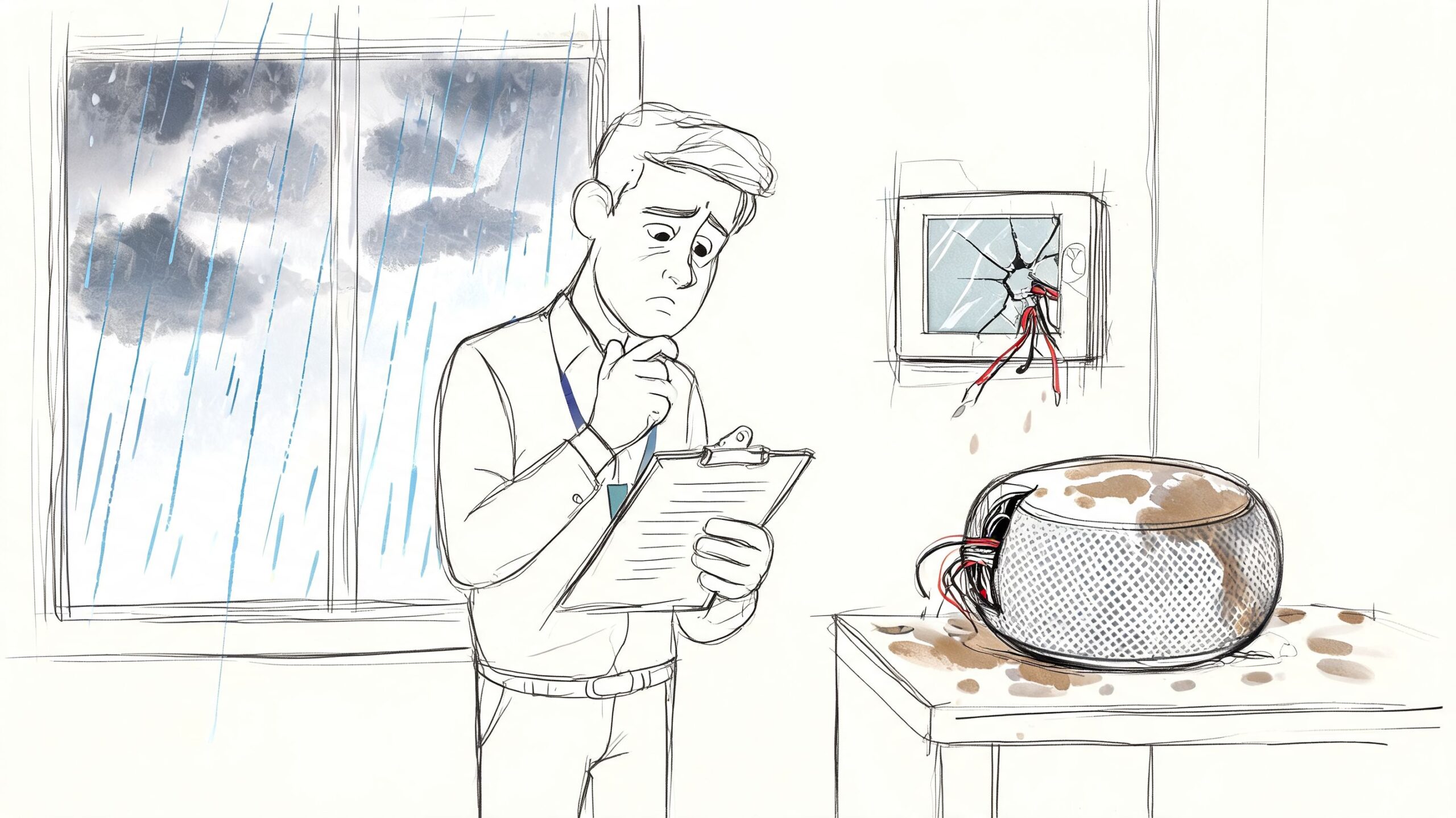
That complexity isn’t a niche problem anymore. The smart home market overview from SwiftBeacon states that the global smart home market was valued at approximately USD 102.3 billion in 2023 and is projected to reach USD 166.7 billion by 2028. The same source notes there were about 411 million smart homes worldwide in 2024, expected to reach 672.57 million by 2027. For insurers and adjusters, that means connected systems are becoming part of routine claim handling, not specialty handling.
Why claims teams feel the friction first
Claims professionals usually encounter the smart home problem before anyone else has framed it clearly. The insured may only know that “the app stopped working.” The contractor may focus on physical repairs. The electrician may restore power but not restore system logic. The carrier still needs answers.
Common friction points include:
- Cause of loss questions: Was the device physically damaged, affected by a surge, or disconnected?
- Scope issues: Does replacement require one device, a hub, a controller, or partial reconfiguration of the whole system?
- Mitigation concerns: If cameras, sensors, or locks are down, who addresses the added exposure during the repair period?
- Documentation gaps: The adjuster may need model-specific information, such as systems similar to TP-Link Tapo camera setups, but the property owner may not have records organized.
Smart home systems now function like property infrastructure. When they fail after a loss, they affect security, habitability, mitigation, and claim clarity all at once.
The connected house is now a risk environment
Consumer guides usually frame connected devices as convenience tools. In claims, they’re part of the loss environment. If a roof opening leads to water intrusion and the home’s connected alarm panel, switches, sensors, or cameras fail in the same event, those systems may influence occupancy decisions, temporary protection, and post-loss monitoring.
That’s why smart home consultants have become relevant to claims work. They bridge the gap between what the house was designed to do digitally and what the claim requires operationally. They can identify what failed, what still works, what should be isolated, and what shouldn’t be reactivated until the structure and electrical conditions are stable.
The Consultant as a Digital General Contractor
A useful way to understand smart home consultants is this. They’re the digital general contractor for the property’s technology layer.
They don’t just mount devices. They coordinate how the home’s connected parts should work together, how they should be documented, and how they should behave when conditions change. In a stable house, that means convenience and reliability. In a damaged house, that means controlled troubleshooting and cleaner decision-making.
What they coordinate
A good consultant looks across the entire technology stack, not at one product category in isolation. That usually includes the network, control platform, cameras, locks, sensors, thermostats, lighting, audio-video components, and the logic tying them together.
Their role is broader than most trades on site:
- The electrician restores or modifies power pathways.
- The low-voltage installer may pull cable and mount equipment.
- The AV installer may focus on entertainment and control interfaces.
- The smart home consultant decides how these systems should be structured so they work as one environment instead of a pile of parts.
That distinction matters in claims. A property can be electrically restored and still remain digitally broken.
What good consultants do that DIY setups don’t
Homeowners often build systems one purchase at a time. They add a video doorbell from one brand, strip lights from another, a thermostat from a third, and a few app-driven accessories later. It works until a router changes, a hub fails, firmware drifts, or storm damage forces a partial reset.
A consultant’s job is to avoid that fragility. They standardize architecture, document dependencies, and reduce single points of failure where possible. If there’s a connected lighting layer, for example, they won’t treat app-controlled LED strip products as isolated novelty items when they’re embedded in a wider automation scene or room control setup.
Practical rule: If a system only works because one homeowner remembers which app controls which room, it isn’t well designed for a loss scenario.
Why the general contractor analogy fits claims work
In a complex loss, someone has to answer sequencing questions. Should devices be powered back up now, or after moisture and electrical inspection? Can temporary internet restoration preserve logs or trigger unstable automations? Does a damaged hub need forensic review before replacement? Should detached accessories be tested in place or offsite?
That’s coordination work. It’s not just installation work.
A smart home consultant also helps claims teams separate three issues that often get blurred together:
| Issue | What it means in practice |
|---|---|
| Physical damage | The device or wiring suffered direct impact, moisture intrusion, heat exposure, or surge-related failure |
| System dependency | One component appears dead because a hub, network path, power supply, or controller upstream failed |
| Configuration loss | Hardware may still function, but programming, pairing, scenes, credentials, or app control have been disrupted |
When nobody separates those categories, replacement decisions get sloppy. The wrong equipment gets ordered, the actual dependency remains unresolved, and the claim circles back.
The value of one accountable technical lead
The strongest consultants are brand-aware but not brand-captive. They understand what certain ecosystems do well, where they break, and what hidden dependencies matter during restoration. They also produce a trail of documentation that other stakeholders can use.
That’s what makes them useful to adjusters, carriers, property managers, and owners. They create one technical narrative for the connected home, especially when everyone else on the file is focused on just one slice of the damage.
Understanding Core Smart Home Consulting Services
Not all smart home consultants offer the same depth of service. The better ones usually operate in four lanes that matter to property owners and claims teams alike: design, integration, security, and accessibility.
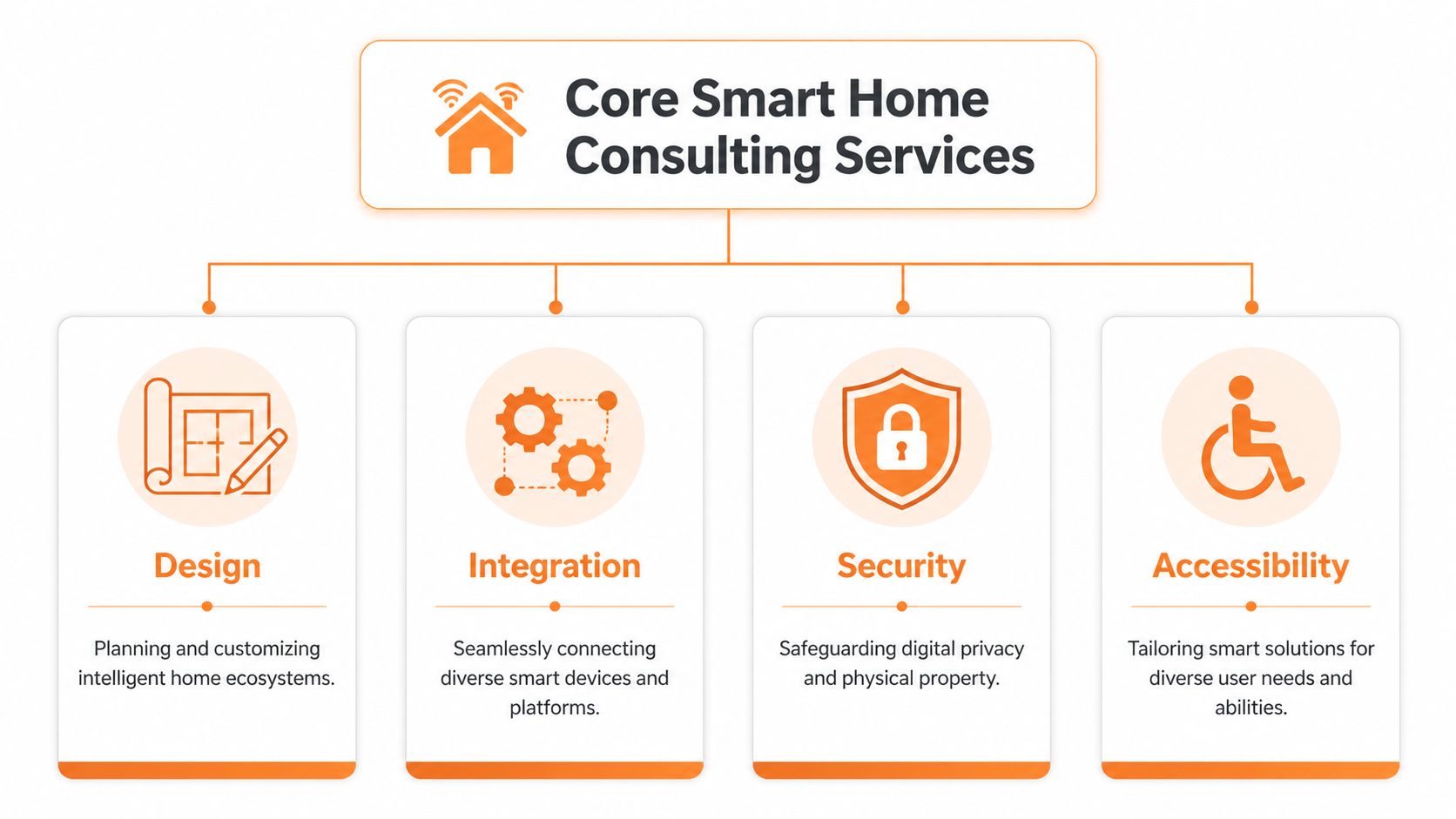
Design
Design is where competent work starts. This isn’t interior decorating for gadgets. It’s the process of deciding what the system should control, how devices should connect, where equipment should live, what should stay local versus app-dependent, and how the home should function during outages or repairs.
Good design asks practical questions early:
- Which systems are mission-critical: locks, cameras, leak detection, environmental monitoring, entry alerts.
- Which systems are convenience-driven: accent lighting, media scenes, novelty routines.
- Which spaces need resilience: detached garages, vacation homes, high-value rooms, vulnerable access points.
- What happens after a partial failure: can basic functions still operate without the full automation layer?
Claims professionals benefit when this groundwork exists because it reduces ambiguity later. If the original design clearly separates life-safety, security, and convenience functions, post-loss decisions become easier.
Integration
Integration defines what is sought when a “smart” home is desired. The critical effort involves getting devices and platforms to communicate reliably.
The Aztec Sound discussion of smart home setup service notes that consultants use protocols such as Zigbee and Z-Wave to improve interoperability, and that this can reduce device conflict rates by up to 70% compared to DIY setups. The same source states that automation-based integration can cut energy consumption by 15% to 30%.
For claims and property management, the bigger point is reliability. An integrated system is easier to diagnose because there’s usually a known control path, known dependencies, and known device relationships. A fragmented system creates guesswork.
Consider a simple security layer built around an entry alarm system with siren and wireless range considerations. In a DIY environment, that device may sit in parallel with separate cameras, separate locks, and separate notifications. In a professionally integrated environment, the alert path, trigger logic, and homeowner response are typically cleaner and easier to review.
Security
Security work has two sides. One is physical. The other is digital.
Physical security includes cameras, door and window contacts, smart locks, occupancy simulation, remote access control, and event verification. In a damaged property, these tools can matter immediately if the site will sit exposed or partially vacant during drying, repair, or material delays.
Digital security covers firmware management, account controls, network segmentation, password handling, remote permissions, and how much of the home’s operation relies on cloud access. After a storm or structural event, digital security often gets ignored because everyone is focused on visible damage. That’s a mistake. A rushed device reset, hub swap, or contractor login can create its own exposure.
If temporary repairs are underway, someone should decide which connected systems remain active, which should be isolated, and who controls access. Leaving that to chance causes trouble.
Accessibility
Accessibility is often the least discussed service category and one of the most valuable. Smart home consultants can tailor controls to the actual user. That may mean simplifying interfaces, consolidating commands, adding voice control, improving entry management, or making routines easier for older occupants and users with mobility limitations.
In claims, accessibility becomes relevant when a property owner is displaced, partially occupying a damaged home, or returning to a repaired home with changed conditions. A consultant can make the rebuilt environment easier to manage, not harder.
What strong service delivery looks like
A complete consulting engagement usually includes a mix of planning, field verification, and documentation. Look for outputs like these:
- System map: what devices exist, where they are, and what depends on what.
- Failure logic: what happens if internet, hub control, or a power source drops.
- User roles: who can arm, disarm, control locks, view, or change settings.
- Recovery notes: what can be restored quickly and what needs reprogramming after replacement.
That’s the difference between a home full of products and a managed technology environment.
How Consultants Impact Insurance Claims and Inspections
The most important role smart home consultants play in the insurance ecosystem is simple. They convert a confusing digital loss into evidence, scope, and action.
That matters because connected-home losses don’t fail neatly. One lightning event can affect routers, switches, hubs, cameras, smart appliances, garage controllers, and scene logic at the same time. A roof opening can expose low-voltage gear, sensors, and powered shades in ways that aren’t obvious from a standard room walk. A temporary power restoration can revive some systems, partially damage others, and wipe out the clean timeline everyone wishes they had.
Why adjusters need a technical translator
A connected property often contains evidence, but that evidence is messy. Device logs, app histories, hub status, firmware records, offline alerts, and event timestamps may all exist. None of that helps if nobody can explain what it means.
A consultant can review the system with a different objective than the homeowner or installing dealer. The homeowner wants things working again. The installer may want to replace hardware and move on. The consultant can document what failed, what likely caused the failure, and what components are downstream of a single point of loss.
That’s useful in inspections for several reasons:
- It narrows disputes over scope.
- It distinguishes damaged equipment from dependent equipment.
- It helps identify whether replacement requires programming and recommissioning, not just hardware swap.
- It supports a more defensible file when electronic systems are part of the loss.
Forensic work after surge and lightning events
Smart home consultants can be especially valuable. The Ace Integrated Tech overview of smart home consultants states that after events such as a lightning strike, consultants can use diagnostic tools for forensic analysis across connected devices. The same source says their reports can restore 90% of system functionality within 48 hours and provide an Xactimate-compatible bill of materials for replacements.
That combination matters in real claims handling. It means the consultant isn’t just saying “the system is down.” They’re identifying what failed, what remains viable, and what should appear in a replacement scope in language the claim side can use.
Field note: The faster someone identifies whether the router, hub, switch, power supply, or endpoint is the actual failed component, the faster the rest of the property file starts making sense.
For homes where network hardware sits at the center of the problem, even a standard residential component such as a router serving moderate square footage and connected endpoints can become a critical dependency. If it fails, multiple “dead” devices may be blind, not destroyed.
Better documentation reduces wasted motion
Claims teams lose time when digital systems are documented casually. “Security system not working” is not useful. Neither is “smart devices damaged.” A consultant can document by ecosystem, dependency, and likely restoration path.
A strong documentation package often includes:
Inventory by location and function
Cameras, sensors, locks, hubs, tablets, smart switches, thermostats, speakers, controllers, and network gear.Observed condition
Direct damage, moisture exposure, no power, intermittent response, offline status, app control failure, communication loss.Dependency notes
Which devices rely on a central bridge, controller, internet access, or low-voltage power source.Repair versus replace observations
What may return to service after stabilization, and what likely requires replacement plus reprogramming.Post-repair commissioning needs
Pairing, account transfer, scene rebuild, access permissions, and user testing.
This level of detail protects everyone. The insured gets a clearer explanation. The adjuster gets cleaner support for valuation and scope. Contractors know what must be preserved during repairs.
Here’s a useful visual reference on the inspection side before moving further into process:
Consultants also shape the rebuild
Their role shouldn’t end at diagnosis. The rebuild phase is where a lot of preventable repeat issues get locked in.
A consultant can advise whether the previous system design made the loss harder to manage. Maybe key devices were placed in vulnerable locations. Maybe the network cabinet lacked protection. Maybe cameras were dependent on a cloud path that failed during an outage. Maybe there was no logical separation between mission-critical monitoring and convenience automations.
That advice is especially valuable when repairs touch multiple trades. A resilient rebuild may involve relocating equipment, simplifying the ecosystem, reducing unnecessary app layers, and documenting the final setup so future claims don’t start from zero.
When to involve one
A consultant usually adds the most value when any of these are true:
- The loss involves more than one connected system.
- The homeowner reports a broad outage after a power event.
- Vacancy or security concerns exist during repairs.
- The home uses custom integrations rather than off-the-shelf standalone devices.
- The file is drifting into disagreement about what is damaged versus what is misconfigured.
At that point, smart home consultants are not a luxury line item. They’re a practical claims resource.
How to Find and Vet a Qualified Consultant
The market has plenty of people who can install devices. It has fewer people who can evaluate a connected property under claim conditions, communicate clearly with adjusters and contractors, and document system logic without turning the job into a sales pitch.
The difference usually shows up in how the consultant talks about process. Strong consultants discuss architecture, failure modes, documentation, and handoff. Weak ones jump straight to brands and replacement wish lists.
What to look for first
Start with practical experience, not marketing polish. Ask what kinds of systems they regularly handle, whether they work across multiple platforms, and how they document pre-loss and post-loss conditions. A consultant who can’t explain their process in plain language usually can’t defend that process when a file gets complicated.
Training and affiliations matter, but only if they’re matched by field discipline. Look for people with a track record in integrated residential systems, low-voltage coordination, and service troubleshooting. If they’ve worked around remodels, custom homes, or technically complex service calls, that tends to help.
A consultant who only knows how to sell one ecosystem usually struggles when the house contains three generations of devices from five brands.
Red flags and green flags
| Red Flag (Warning Sign) | Green Flag (Positive Indicator) |
|---|---|
| Pushes one brand before understanding the property | Starts with inventory, use case, and existing dependencies |
| Talks only about installation | Talks about testing, documentation, recommissioning, and user access |
| Can’t describe how they handle partial system failure | Explains what stays live, what gets isolated, and what needs staged restoration |
| No sample reports or sanitized documentation examples | Provides clear examples of inventories, notes, or turnover documents |
| Treats network issues as “someone else’s problem” | Understands that network stability is part of system performance |
| Avoids coordination with contractors or adjusters | Can work with multiple stakeholders without losing the technical thread |
| Recommends replacing everything after every fault | Distinguishes damaged hardware from dependency or programming issues |
Questions that reveal competence quickly
Instead of asking whether they’re “experienced,” ask questions that force specificity.
- How do you document an existing system before repairs begin
- How do you separate direct device damage from upstream dependency failure
- What do you need from the electrician, roofer, or mitigation team before reactivating equipment
- How do you handle account credentials and app access during handoff
- What does your final closeout package look like
The best answers aren’t flashy. They’re organized.
Fee structure matters less than scope clarity
Consultants may charge hourly, by project, or under a service arrangement for larger portfolios. The model matters less than whether the scope is clear. If the proposal doesn’t define discovery, testing, reporting, coordination, and follow-up, expect drift.
A better engagement letter typically spells out:
- Site review and inventory work
- Diagnostic testing
- Coordination with trades
- Reporting expectations
- Return visit terms
- Post-repair commissioning or user training
That clarity protects the consultant too. It prevents them from being pulled into open-ended support when the underlying issue is unfinished construction or unstable power.
A Hiring Checklist and Essential Interview Questions
Hiring smart home consultants for claims-related work should feel more like vetting a specialist than shopping for consumer tech help. This is more than just buying convenience; you’re deciding who gets to interpret a digital system that may affect scope, security, mitigation, and timeline.
A practical hiring checklist
Use a simple sequence and don’t skip steps.
Define the problem before contacting anyone
Know whether the need is pre-loss planning, post-loss diagnostics, rebuild design, temporary security support, or system documentation. Vague requests produce vague proposals.Request a description of their process
Not a list of products. Ask how they approach discovery, testing, documentation, and restoration.Confirm they can work in partially repaired or unstable conditions
If the property is still drying, under temporary tarping, or awaiting electrical clearance, the consultant needs to know how to sequence their work safely.Ask for sample deliverables
Redacted examples are fine. You want to see whether their documentation is usable by non-technical stakeholders.Clarify ownership and access
Determine how they handle app credentials, admin rights, transfer of control, and who signs off on changes.Review contract boundaries
Make sure the agreement states what’s included, what triggers a return trip, and what happens if the property conditions change midstream.
If the property contains control points that affect everyday function, even something simple like a wall switch remote outlet control setup, ask whether they treat that device as standalone or part of a larger scene logic. Small components can drive larger confusion when nobody maps their role correctly.
Interview questions that get real answers
These questions tend to separate operators from enthusiasts.
Process and documentation
- Describe your process for documenting a smart home system for an insurance claim.
- What information do you capture before any device is reset, removed, or replaced?
- How do you present your findings so an adjuster and contractor can both use them?
Listen for orderly answers. They should mention inventory, dependencies, observed condition, and recommended next actions.
Loss causation and diagnostics
- How do you approach a home where multiple connected devices failed after a storm or power event?
- How do you distinguish surge-related damage from network loss or controller failure?
- When do you recommend testing in place versus removing equipment for bench evaluation?
A capable consultant won’t promise certainty where none exists. They’ll explain method.
Ask them what they do before they touch the first reset button. If the answer is vague, keep looking.
Resilience and rebuild planning
- How do you design for resilience against power disruption, intermittent internet, or phased construction?
- Which parts of a system do you prefer to keep simple, and which parts justify deeper integration?
- How would you redesign a system that became unmanageable during the last loss?
Good answers usually show restraint. Experienced consultants know every possible automation doesn’t belong in every property.
Coordination with other stakeholders
- What do you need from the electrician before recommissioning devices?
- How do you coordinate with roofers, mitigation teams, or general contractors when equipment is near damaged areas?
- Have you worked on projects where the structural condition limited what could be reactivated? What changed in your approach?
This matters because claims work rarely happens in a clean, finished house.
Judgment and problem-solving
- Tell me about a project that went wrong and how you managed it.
- What’s an example of a system that looked damaged but wasn’t, or looked fine but wasn’t?
- When do you tell a client to delay installation or restoration instead of moving ahead?
The strongest candidates can discuss mistakes, constraints, and sequencing. They don’t pretend technology solves every site condition.
What the final decision should come down to
Choose the consultant who can reduce uncertainty, not the one who sounds most excited about products.
The right hire should be able to enter a damaged property, identify what’s safe to assess, communicate clearly with non-technical parties, preserve useful evidence, and leave behind documentation that supports action. That’s the standard worth paying for.
Your Next Steps for Managing Smart Home Risk
Smart homes have crossed over from convenience category to property risk category. Once connected locks, sensors, cameras, hubs, thermostats, and automation routines affect security, occupancy, and loss documentation, they become part of responsible claim handling.
The missing piece in many files is specialized guidance. The IQ Home and Office discussion of smart home consulting notes that current guidance rarely addresses integration with high-risk, storm-damaged properties, creating a critical gap for carriers and adjusters. That same source states consultants help manage smart systems when structural integrity is uncertain, electrical systems are compromised, or temporary repairs are underway.
What carriers should do
Build a short list of consultants who can support complex residential files before the next severe weather event hits. Don’t wait until a disputed electronics scope appears in the middle of a live claim. Vet process, reporting quality, and responsiveness in advance.
What adjusters should do
Know the trigger points for escalation. If a loss involves surge concerns, broad smart-device failure, custom integration, security exposure during repairs, or confusion over what failed, request specialized review early. Early technical clarity usually prevents late-file argument.
What homeowners and property managers should do
If the property already has a layered smart system, get it documented before there’s a loss. After storm or tree damage, don’t assume every device should be rebooted or replaced immediately. In some cases, the safest move is to stabilize the structure, verify electrical conditions, and then bring in someone who can assess the system without erasing useful evidence.
The best time to understand a home’s digital infrastructure is before it becomes part of a disputed claim.
Smart home consultants fill a role most property teams now need. They help translate connected systems into practical decisions about safety, scope, restoration, and future resilience. In a connected housing stock, that’s no longer optional knowledge.
If you need experienced field support when technology issues intersect with storm damage, steep roofs, emergency stabilization, or detailed property documentation, Fox Claims Consultants LLC can help move the file forward with fast inspections, clear reporting, and safety-focused claim support.
Leave a Reply