
You get the assignment after the storm surge, the hail swath, or the tree impact. The desk file is thin. The photos are weak. Access is questionable. The roof is steep, wet, or too high for a routine inspection. Meanwhile, the insured wants answers, the carrier wants defensible documentation, and the adjuster needs facts fast enough to keep the claim moving.
That’s where property loss consultants earn their place. In difficult claims, speed without accuracy creates rework. Accuracy without site safety creates liability. And neither matters if reporting is late or incomplete. When you’re dealing with high-risk structures and post-catastrophe confusion, you need a partner who can get on site, document conditions correctly, and give you usable information for decisions, not just more noise.
What Exactly Is a Property Loss Consultant?
A property loss consultant is a field-focused specialist brought in when a claim needs more than a routine look. Think of the role as the special operations unit of property claims. General adjusting handles a broad set of claim tasks. Property loss consultants are deployed when the site is hazardous, the damage is technically disputed, access is difficult, or the file needs stronger documentation before anyone can value the loss confidently.
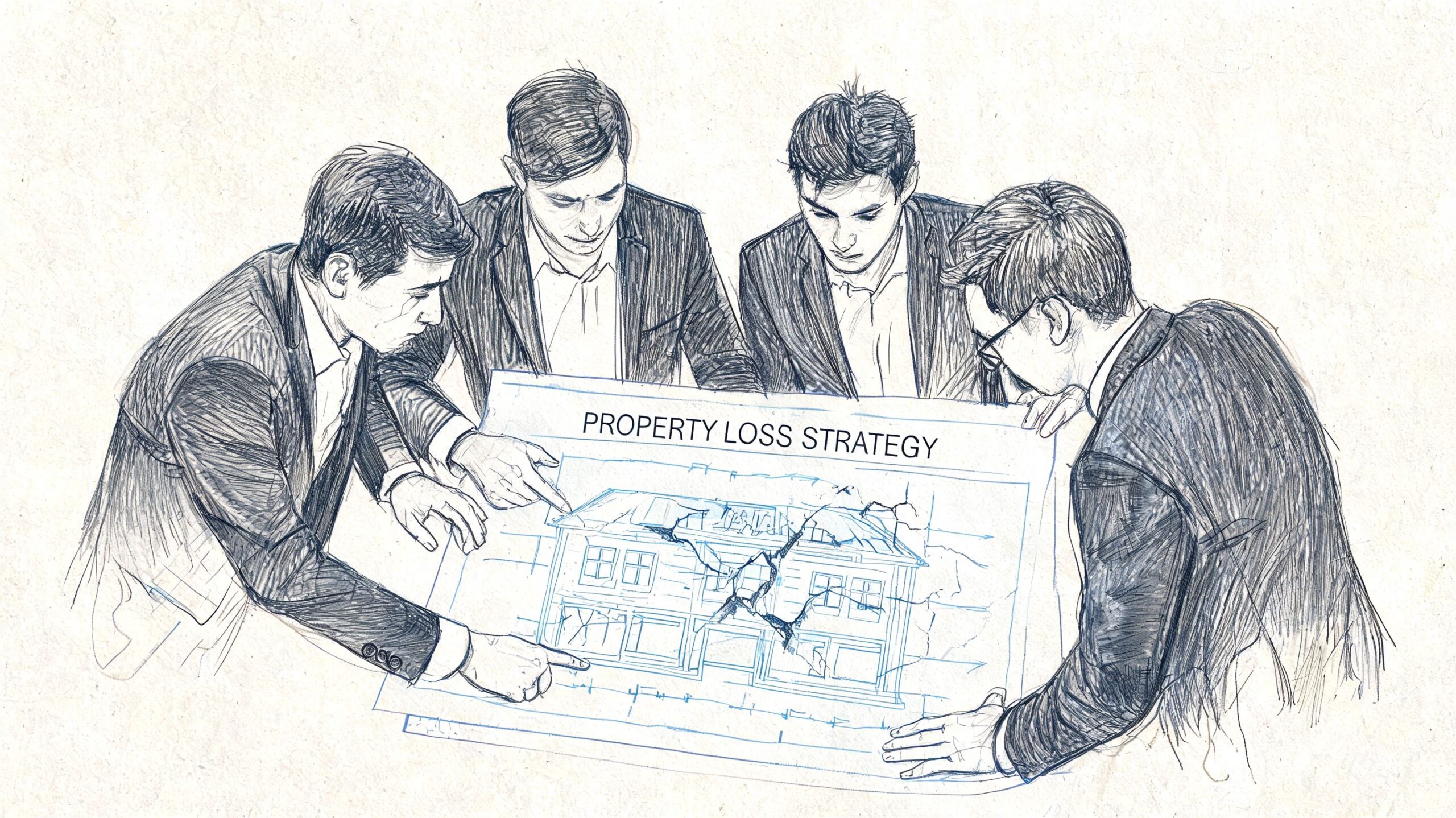
Their job is straightforward in principle, even if the fieldwork isn’t. They inspect, document, measure, observe hazards, identify visible damage patterns, and report findings in a way carriers and adjusters can use. In practice, that may mean ladder assist on a steep roof, emergency tarping after wind-driven rain, a tree-impact assessment, or a full property inspection with photo documentation and estimating support.
What they are not
Confusion often arises. A property loss consultant is not the same thing as a public adjuster.
A public adjuster represents the policyholder’s interests in the claim. A property loss consultant, in the carrier and adjuster context, is typically engaged to provide objective field data and site support. The consultant’s value is in accurate conditions reporting, not advocacy for one side’s claim position.
Practical rule: If you need representation in negotiation for the insured, that’s a different role. If you need reliable site facts, safe access, and field documentation, you’re looking for a property loss consultant.
Why the role matters now
Loss pressure has made field accuracy more important, not less. In 2023, the U.S. property/casualty insurance industry recorded a net underwriting loss of $21.2 billion, which underscores why precise inspections, rapid emergency response, and strong documentation matter to claim outcomes and expense control, as reported by Risk & Insurance on the 2023 P&C underwriting loss.
That pressure shows up in daily claim handling. If a roof can’t be inspected safely, the file stalls. If the temporary repair is delayed, the damage often expands. If the measurements are weak, estimating gets challenged. If the photos don’t tell the story, the adjuster ends up revisiting issues that should have been resolved the first time.
What good consultants bring to the file
Many property loss consultants come from insurance, construction, or engineering backgrounds and may hold credentials such as CPM, CIC, or CISR. Those letters matter less than whether the consultant can produce fieldwork that stands up to scrutiny.
A dependable consultant should give you:
- Safe access to difficult structures
- Clear photo and condition documentation
- Accurate measurements and scope detail
- Timely reporting that supports estimating
- Practical mitigation observations
Even small building components can affect the loss narrative when ventilation, exterior assemblies, or roof-edge details become relevant during inspection, which is why some adjusters also review materials tied to components such as soffit vent assemblies and related exterior products when evaluating damage context.
The Core Services Property Loss Consultants Provide
The work sounds simple until you’re standing below a three-story structure with a saturated roof, broken limbs across the ridge, and no safe way for the adjuster to get eyes on the damage. In such instances, specialized services stop being optional and start being operational.
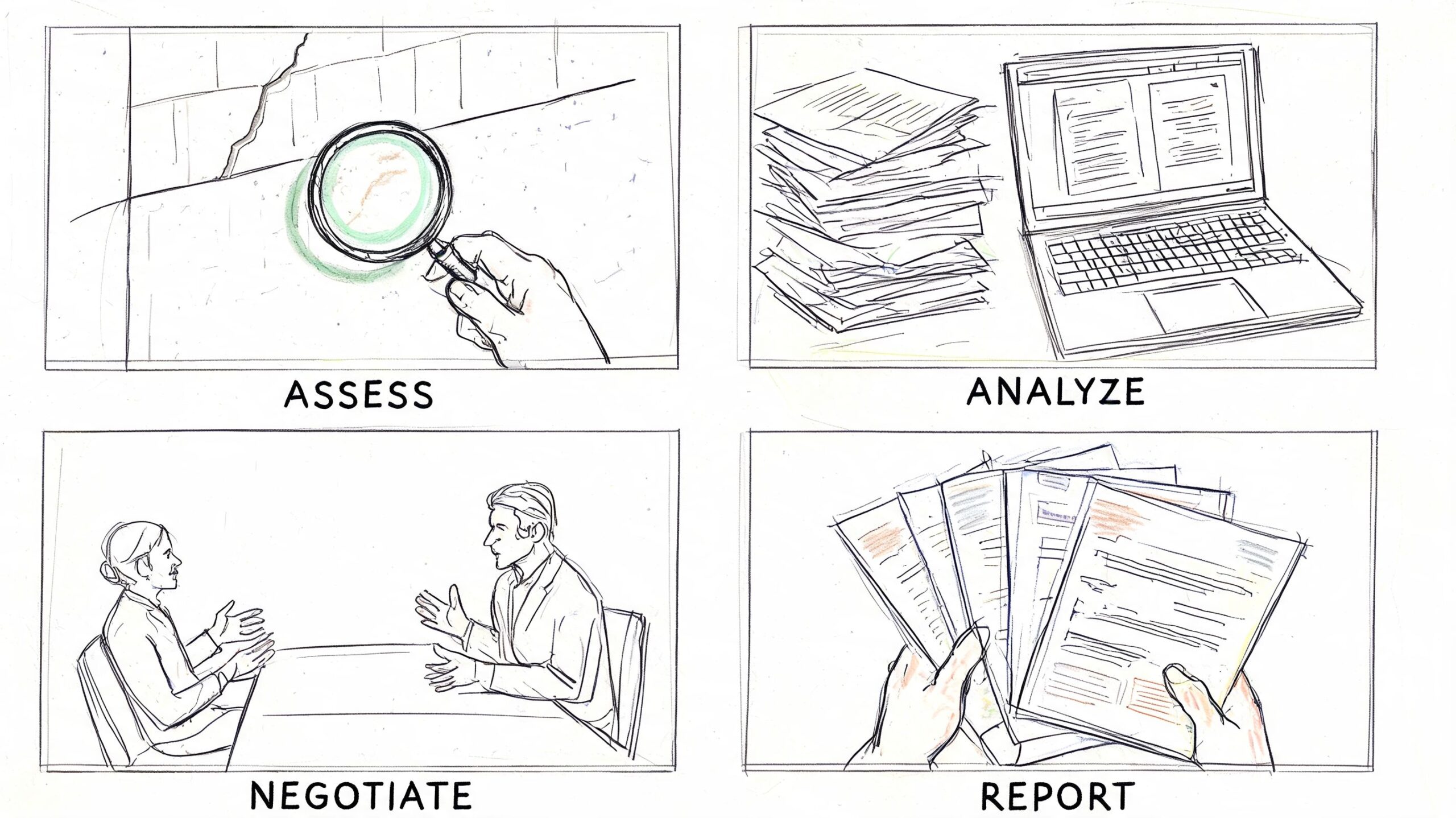
Steep and tall roof inspections
Steep roofs create two problems at once. They increase fall exposure, and they limit what the adjuster can verify personally. A specialist solves both by using the right access methods, documenting conditions systematically, and reporting what’s present instead of relying on assumptions from ground-level photos.
On these assignments, the consultant isn’t just checking for obvious shingle disturbance. They’re looking at roof planes, edge conditions, punctures, uplift-related displacement, flashing transitions, drainage paths, collateral indicators, and signs of prior wear versus event-related damage. That distinction matters when the claim turns on causation.
Ladder assist for adjusters
Ladder assist is one of the most practical services in the field. An adjuster may know exactly what needs to be examined, but not have the equipment, manpower, or safety setup to get there. The consultant provides site access support so the adjuster can inspect the loss area without taking unnecessary risk.
This works well on residential claims with awkward elevations and on commercial claims where roof access is limited or controlled. It also keeps the assignment moving. Waiting for a second visit because no one could safely access the roof on day one wastes time and usually creates avoidable friction with the insured.
Storm and tree damage assessment
Tree impacts and storm losses often involve mixed causation questions. Was the damage from direct impact, water intrusion, uplift, or a pre-existing weakness that failed under load? Good property loss consultants document the sequence clues at the site. Branch penetration paths, displaced materials, puncture locations, moisture spread, and visible structural stress indicators all help the adjuster make a better decision.
On storm claims, the fastest way to lose time is to send back a report that answers only part of the damage question.
Emergency tarping and temporary repairs
This is one of the highest-value field services because it protects both the structure and the claim. Temporary dry-in work can stabilize the site, reduce ongoing interior damage, and preserve the condition of affected areas long enough for proper inspection and estimating.
It also changes the tone of the claim. When the insured sees fast action, communication usually improves. When the carrier sees mitigation begin early, secondary damage issues are easier to manage.
Forensic observations that support repair scope
Some losses need more than surface-level notes. According to Adjusting Today on property loss professionals, 65% of hurricane-related roof failures stem from inadequate edge securing or fastener corrosion, with pull-through resistance reduced by up to 50% per ASTM E1592 testing. The same source notes that mold can inflate claims by 20-30% if secondary damage goes undetected. That’s why experienced consultants pay close attention to failure origin, not just visible aftermath.
A weak inspection says “roof damaged.” A useful inspection explains where failure began, what related materials were affected, and what temporary or permanent repair path makes sense.
Documentation that feeds estimating
The field report should support the estimate, not fight it. That means measurements, elevations, room counts, material identification, slope notes, area photos, close-ups, and clear labeling. If you use Xactimate or similar estimating workflows, incomplete field capture creates avoidable back-and-forth later.
Useful field packages often include:
- Overview photos that establish the whole structure and exposure
- Close-range damage photos tied to exact locations
- Measurements that estimating teams can rely on
- Hazard notes that explain access constraints or mitigation needs
- Repair context that helps separate direct damage from unrelated conditions
When field teams need organized supplies for sampling, labeling, or protecting collected materials, practical items like stackable heavy-duty storage boxes with lids can make onsite handling cleaner and less error-prone.
Key Benefits for Carriers Adjusters and Homeowners
The value of property loss consultants changes depending on where you sit in the claim. Carriers care about file quality and expense control. Adjusters care about access, speed, and report usability. Homeowners care about what happens next and whether someone is taking control of the loss.
For carriers
With the U.S. P&C sector facing $21.1 billion in 2023 underwriting losses driven by natural disasters and inflation, documentation quality matters because it affects both claim outcomes and operational efficiency, as outlined by Verisk’s industry loss estimates and claims context.
For carriers, the gains are practical:
- Better loss control: Thorough photos, measurements, and hazard observations give examiners a stronger factual file.
- Lower reinspection pressure: When the first field package is complete, fewer claims need another site visit.
- Cleaner vendor coordination: Consultants can document what mitigation is needed and what condition existed before temporary work begins.
- Improved file defensibility: When scope or causation is questioned, detailed documentation gives the carrier a firmer position.
For adjusters
Adjusters usually feel the benefit first because they’re the ones trying to move the claim with incomplete site access or limited field support.
- Safer inspections: High-slope roofs, unstable debris fields, and compromised exteriors are not places to improvise.
- Faster claim movement: The adjuster gets usable information without waiting for a second or third touch.
- Better estimates: Accurate measurements and labeled photos reduce friction between field findings and estimate preparation.
- Caseload protection: When a consultant handles the dangerous or time-intensive site work, the adjuster can keep the rest of the desk moving.
If the consultant’s report forces you to call and ask basic location questions about the photos, the service didn’t solve the real problem.
For homeowners
Homeowners don’t usually ask for a property loss consultant by title. They feel the difference in how the claim is handled.
- Faster site stabilization: Emergency tarping and temporary repairs can limit further water entry.
- Clearer communication: Better reporting often means fewer vague updates and fewer repeat visits.
- Less confusion on scope: When damage is documented carefully, the insured has a clearer picture of what’s being reviewed.
- A smoother claim experience: The process feels more controlled when someone is visibly handling the difficult parts.
A quick view of the value
| Audience | What they need | What the consultant delivers |
|---|---|---|
| Carrier | Defensible claim file | Photos, measurements, hazard observations, timely reporting |
| Adjuster | Safe access and usable field data | Ladder assist, roof inspection, complete documentation |
| Homeowner | Stabilization and clarity | Temporary repairs, visible progress, fewer delays |
Even routine logistics can support cleaner field execution. Teams that prepare well for document handling, samples, and small retained materials often rely on simple packaging tools such as corrugated moving and shipping boxes to keep site materials sorted through the claim process.
The Property Loss Engagement Process A Step-by-Step Checklist
When the assignment goes well, it feels simple. That usually means the process was tight from the start. Most claim delays tied to outside field support come from vague scope, poor communication, or a report format that doesn’t match how the adjuster works.
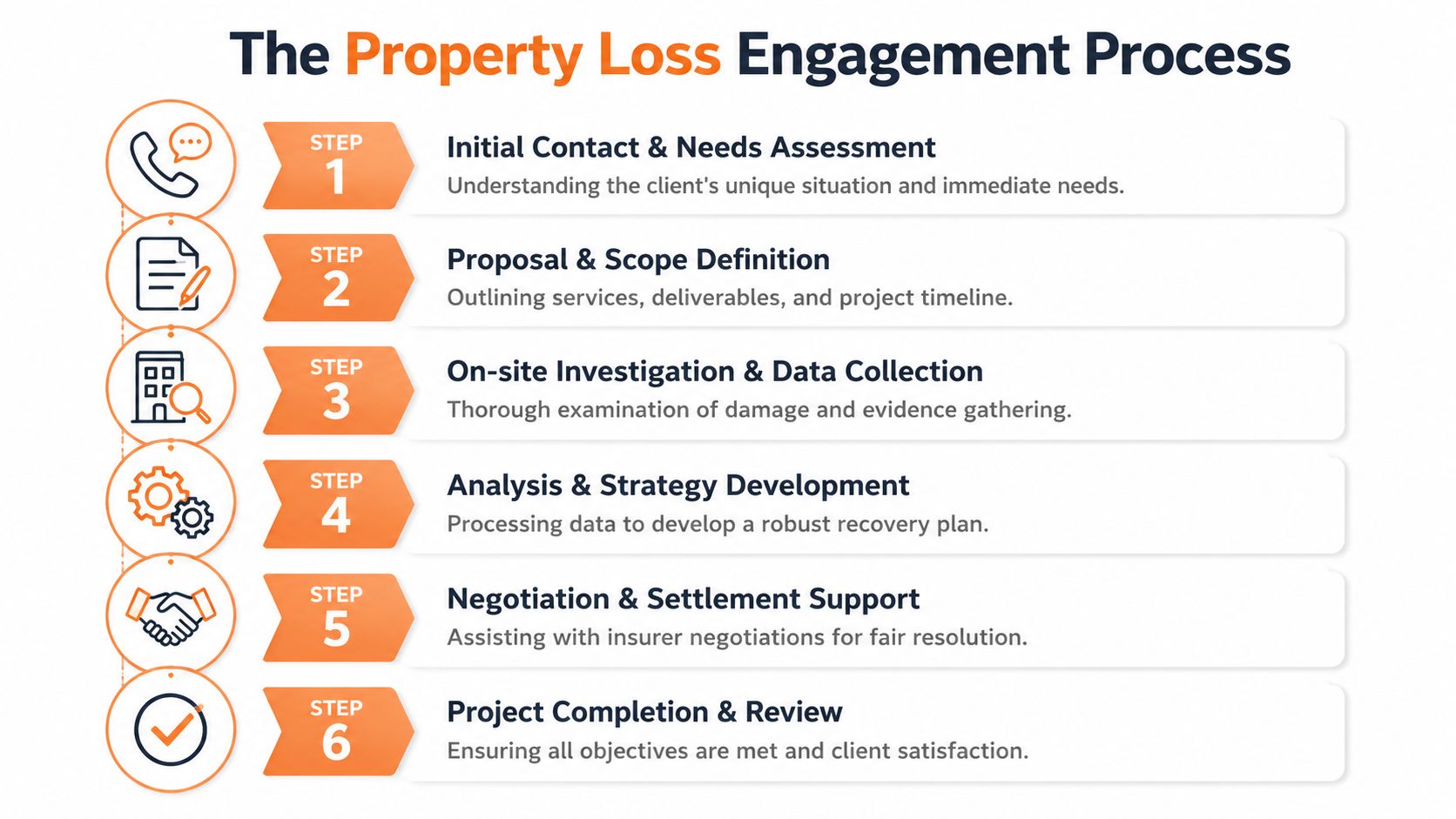
1. Initial assignment and dispatch
Start with the essentials. What’s the loss type, what needs inspection, who’s the contact, and what access issues are already known? If the file suggests a steep roof, multi-story elevation, active leak, or tree involvement, say that up front.
A weak dispatch note creates a weak inspection. The consultant needs enough context to bring the right safety gear, access plan, and reporting focus.
2. Pre-inspection communication
Before boots hit the property, confirm who will attend, whether the insured or contractor will be present, and whether temporary mitigation is already in place. This is also where expectations should be set on what the consultant is there to do. Inspection support, documentation, and condition reporting are not the same as coverage determination.
Ask early: Is this assignment about access, cause, scope, mitigation, or all four? The answer changes how the inspection should be run.
3. On-site safety review and assessment
No one should climb first and think later. The field team should assess roof pitch, moisture, debris, access points, fall exposure, and any instability before work begins. If conditions aren’t safe, the process should adapt. That may mean postponing physical access, changing methods, or documenting from safer vantage points until conditions improve.
This is also when the consultant confirms the inspection path. Exterior first, then roof, then elevations, then interior, or another sequence based on active damage and access.
4. Data capture and photo documentation
This stage determines whether the final report will help. Good consultants capture enough to support both claim handling and estimating. That includes overview images, close-range detail shots, dimensions, notes on affected materials, and visible hazard conditions.
Numbered photo organization helps. So does location-specific labeling. Adjusters shouldn’t have to guess whether an image is the rear slope, the north elevation, or the second-floor bedroom ceiling.
5. Report generation and quality review
A useful report is specific, readable, and aligned with the assignment. It should answer the questions asked, identify access limits if any existed, and present findings in a sequence that makes sense. Before delivery, the consultant should review for missing measurements, unlabeled photos, internal inconsistencies, and unsupported conclusions.
Many providers fall short in an important area. They may get to the site quickly but send back a package that still needs interpretation work from the adjuster. That’s not a finished product.
6. Final delivery and follow-through
Once the report is delivered, the job isn’t always done. The adjuster may need clarifications, added photos, or coordination tied to estimating. A responsive consultant handles those follow-ups without dragging the file into another cycle.
For field teams shipping small tools, forms, or protective materials between assignments, practical packing supplies like air pillow column packing material can help keep gear intact and organized during rapid deployment.
Choosing a Qualified Consultant What to Look For
A file can go sideways fast after a wind event. The roof is steep, debris is still shifting, the insured wants answers, and your adjuster needs usable facts without sending someone into a bad access situation. That is where vendor selection shows up in claim cycle time, report quality, and liability exposure.

Certifications and role-specific training
For steep-slope and difficult-access work, general inspection experience only gets you so far. As noted in this summary of steep-roof claim risks and consultant qualifications, roof pitch, fall exposure, and access conditions can slow claims and raise field risk when the person on site is not trained for that environment.
Ask what training applies to the assignments you send out. If a consultant says they handle steep roofs, tall structures, or storm-damaged properties, get specific. Fall protection training, OSHA awareness, ladder safety, rope or harness protocols, and documented field procedures matter more than broad marketing language.
One question usually exposes the difference quickly.
What training do your inspectors have for steep-slope access, fall protection, and unstable post-storm conditions?
Safety process, not safety language
A qualified consultant has a clear stop-work threshold. Wet decking, brittle surfaces, loose ridge material, active electrical hazards, and unstable tree impact conditions all require judgment, not bravado.
Ask how the firm handles roofs that are visible but not safely walkable. The right answer may include alternate inspection methods, limited-scope documentation, drone support where appropriate, or a return visit when conditions improve. For night loss scenes, staging and perimeter visibility also matter. Equipment such as commercial dusk-to-dawn area lighting for temporary site visibility can support safer exterior work around damaged structures, but lighting does not turn a bad access condition into a safe climb.
A consultant who treats every roof as accessible creates problems for you later.
Reporting quality
Good field work loses value if the report creates more questions than it answers. Review a sample if your process allows it. Check whether the findings are tied to exact elevations, roof slopes, rooms, or impact areas. Check whether the narrative separates observed conditions from assumptions.
If the consultant's report forces you to call and ask basic location questions about the photos, the service failed to solve the core problem.
This matters most on catastrophe files and steep-roof losses, where the adjuster may never see the site in person. In that setting, clear photo indexing, accurate measurements, hazard notes, and concise conclusions are what move the file.
Technology and workflow fit
Use matters more than features. Drones, digital sketch tools, mobile photo capture, and cloud delivery help when they shorten the path from inspection to decision. They do not help if the field team cannot explain what they saw, why access was limited, or how the documentation supports scope review.
Ask how their technology fits your workflow. Can they label photos in a way your desk team can follow quickly? Can they deliver documentation that supports estimating without another site visit? Can they flag safety constraints early enough for you to adjust the claim plan?
Here’s a practical comparison:
| Selection area | Weak answer | Strong answer |
|---|---|---|
| Roof access | “We do roof inspections” | Explains access methods, stop-work triggers, alternate inspection options, and documentation steps |
| Reporting | “You’ll get photos quickly” | Explains labeling, measurements, location references, narrative findings, and turnaround |
| Communication | “We’ll keep you posted” | Gives a status process from dispatch through follow-up questions and file-ready delivery |
Questions worth asking before you assign
How do you handle a roof that can be seen from the ladder but should not be walked?
What does your final deliverable include besides photos?
How do you document access limits so the file does not stall later?
Can your reporting support estimating workflows without a second site visit?
One practical option in this category is Fox Claims Consultants LLC, a national property inspection partner that handles steep and tall roof inspections, storm and tree damage assessments, ladder assist, emergency services, and estimating support.
Real-World Scenarios Fox Claims in Action
The clearest way to judge property loss consultants is to look at what happens when the assignment is messy. Not when the weather is clear and the roof is easy. When the claim has stalled, access is poor, and everyone on the file is waiting for facts.
Multi-family roof loss after a major wind event
A desk adjuster receives a claim on a multi-family building with active water intrusion on upper units. The initial photos show displaced roofing and soaked interior ceilings, but no one on the first visit could safely access the upper roof sections. The file is open, but not really moving.
The consultant is dispatched with a narrow mission. Inspect the roof safely, document visible storm-related conditions, photograph temporary mitigation needs, and give the adjuster a package that can support estimating and next-step decisions. On this kind of assignment, the difference between progress and delay usually comes down to disciplined field capture.
A study referenced by Mission Property Loss Consultants states that claims with digital photo logs and live updates resolve 35% faster. That tracks with what adjusters see in practice. When the field team sends organized photo logs, status updates, and clear site notes while the file is still active, the adjuster can make decisions before the momentum disappears.
Tree impact on a steep residential roof
A homeowner reports that a large limb hit a steep-pitch roof during a storm. The exterior view suggests localized damage, but the interior staining doesn’t line up neatly with the visible impact area. A generic inspection frequently proves inadequate in these situations. The obvious hit point gets photographed, but the surrounding roof system and water path don’t get enough attention.
A skilled consultant approaches the claim differently. The impact zone is documented first, then adjacent materials, flashing transitions, attic or upper interior indicators, and any signs that water traveled beyond the initial breach. That fuller picture helps the adjuster avoid under-scoping a repair or missing secondary damage.
This is also where communication matters. If the file includes real-time notes and organized images, the adjuster doesn’t need to wait for a polished final package to understand whether emergency dry-in is necessary.
Large hail event with claim volume pressure
In a hail event, quality often drops when volume rises. Everyone can get buried. Carriers need site data at scale. Independent adjusters need partners who can capture consistent documentation across many files without turning the reporting process into a bottleneck.
The right consultant setup standardizes photo sequences, naming conventions, measurements, and field notes so each file arrives in a usable format. That consistency matters as much as speed. Fast reports that vary wildly from claim to claim still create rework.
Even practical field readiness can make a difference during surge events. Teams operating after dark or in damaged common areas often depend on equipment such as commercial dusk-to-dawn security lighting to support safe staging and visibility around the property perimeter.
FAQs About Property Loss Consulting
What’s the difference between a property loss consultant and an independent adjuster?
An independent adjuster handles claim responsibilities on behalf of the carrier, including investigation and reporting within the scope of the assignment. A property loss consultant usually supports that process with specialized field services such as difficult-access inspections, ladder assist, emergency tarping, detailed documentation, and estimating support. One can complement the other.
When should you bring in property loss consultants?
Bring them in when access is unsafe, the roof is steep or high, the site is unstable, the damage pattern is technically complex, or the claim needs stronger documentation than a routine inspection can provide. They’re especially useful after storms, tree impacts, and catastrophe-driven surge periods.
How quickly can a consultant get on site after a storm?
That depends on location, weather conditions, road access, active hazard conditions, and claim volume. The practical question isn’t just arrival time. It’s whether the consultant can arrive ready to inspect safely, communicate clearly, and provide a usable report without creating another delay.
How are property loss consultants usually priced?
Pricing varies by assignment complexity. Factors include roof height and pitch, travel distance, urgency, whether temporary repairs are needed, whether interior and exterior inspections are both required, and how much documentation or estimating support the file needs. The right way to compare providers isn’t just by fee. It’s by whether the first visit gives you a complete enough product to avoid additional cost later.
Do they help homeowners directly?
They can, especially when emergency stabilization or site documentation is needed. But in the carrier and adjuster setting, their main role is to support claim handling with accurate field information. That usually benefits the homeowner because the file moves with fewer unanswered questions.
What should you ask before assigning one?
Ask about safety protocols, steep-roof experience, report format, photo labeling, communication process, and whether the consultant’s deliverable will support your estimating workflow. If the answers are vague, expect the report to be vague too.
If you need a field partner for steep roof inspections, ladder assist, storm and tree damage assessments, or rapid emergency response, Fox Claims Consultants LLC provides nationwide property inspection support designed to help carriers, adjusters, and policyholders move difficult claims forward with safer access, clear documentation, and timely reporting.
Leave a Reply