
When you have a property claim, the first thing you do isn't filing paperwork—it's damage control. That immediate, common-sense action you take to keep a bad situation from getting worse has a name: mitigation. It’s the single most important first step in protecting your property and setting your claim up for a smooth, fast resolution.
What Mitigation in Insurance Really Means for You
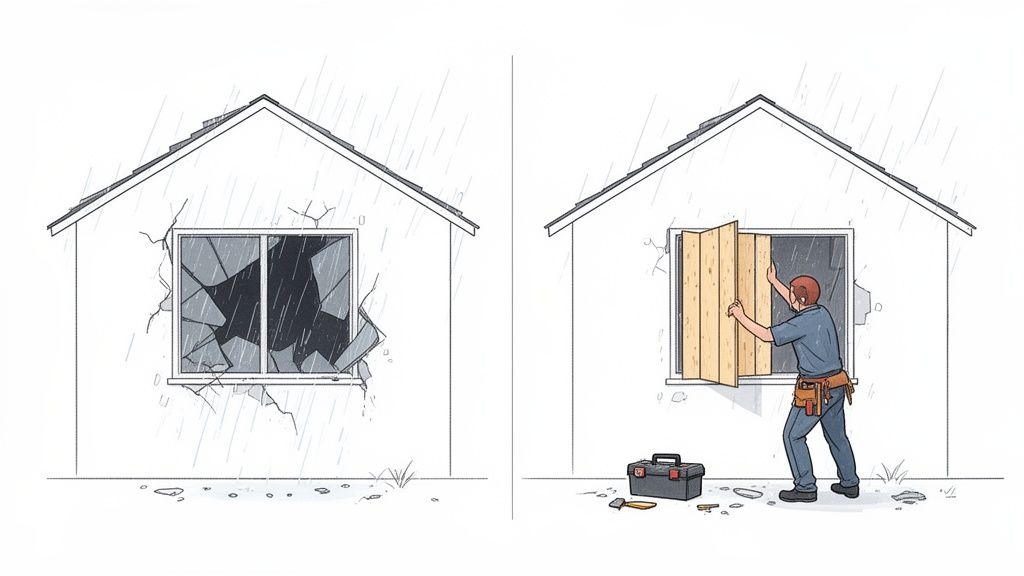
After a storm or other disaster hits your home, your first instinct is to make sure everyone is safe. The second is to look at the damage and wonder, "What now?" This is where mitigation comes into play. It's not just a good idea; it's your responsibility as a policyholder to take reasonable steps to stop the damage in its tracks.
Think about it this way: a hailstorm shatters a window in your living room while it's still raining. The broken glass is the initial problem. But if you do nothing, the rain pouring in will quickly ruin your floors, furniture, and electronics. That’s secondary damage, and it can become a much bigger, more expensive mess.
Mitigation is boarding up that broken window. It's the immediate, temporary fix you put in place to protect what’s inside your home. Letting the rain pour in is the exact opposite of what you’re supposed to do.
Your First Line of Defense
This "duty to mitigate" isn’t just a friendly suggestion from your insurance company. It's written into almost every property insurance policy. Carriers expect you to act reasonably to protect your property from further harm, just as you would if you didn't have insurance.
Taking these quick actions does a few critical things:
- It Contains the Damage: A small problem doesn't get the chance to become a catastrophe. A quick tarp on the roof stops a minor leak from becoming a ceiling collapse, soaked insulation, and a major mold problem.
- It Protects Your Claim: When you mitigate, you show the adjuster you've done your part. This helps draw a clear line between the storm's initial damage and any later issues, which makes the scope of the claim much clearer.
- It Speeds Everything Up: Preventing secondary damage makes the adjuster's job easier and faster. Assessing the original loss is more straightforward, which helps shrink the claim cycle time and get you back to normal sooner.
Getting this principle right is the foundation for a successful claim. If you're facing a complex situation and aren't sure where to start, getting professional insurance claims assistance can give you the clarity and support you need from day one.
Your Contractual Duty to Mitigate Property Damage
When you buy an insurance policy, you’re signing a contract. Tucked away in that contract is a clause most people skim over until they need it: the “duty to mitigate” or “duties after a loss.”
This isn’t a friendly suggestion—it's a binding part of your agreement. It means you are required to take responsible, common-sense steps to prevent further damage after a loss occurs.
Think of it as a partnership. Your insurer trusts you to stop the bleeding, and in return, they agree to cover the costs of the initial wound. If you fail to act, and a small problem spirals into a catastrophic one, it can seriously complicate your claim.
Reasonable Steps vs. Permanent Repairs
A major point of confusion for property owners is what they’re actually allowed to do. The key is understanding the difference between temporary mitigation and permanent repairs. Your insurer expects you to take reasonable and necessary steps to secure the property right away.
These are the immediate, stop-gap actions that stabilize the situation:
- Emergency Roof Tarping: Getting a tarp over a hole in the roof to keep rain from destroying ceilings, insulation, and everything inside.
- Boarding Up Windows: Securing broken windows and doors to protect the property from weather, theft, or vandalism.
- Water Extraction: Pumping out standing water from a burst pipe before it can lead to widespread mold and structural rot.
The good news? The cost of these emergency measures is almost always covered. Insurers see these expenses as a smart investment, as they prevent a much larger, more expensive claim down the road.
However, mitigation does not mean starting permanent repairs. You shouldn’t hire a roofer to replace the entire roof or bring in a contractor to rebuild a wall before your adjuster has approved the scope of work.
Jumping the gun on permanent repairs can lead to major disputes over cost and scope, and you could get stuck paying the bill. Your job is to stabilize, not rebuild. Getting this distinction right protects your property and your claim.
Real-World Examples Of Effective Mitigation
Talking about mitigation in theory is one thing. Seeing it in action is another.
Effective mitigation is all about taking swift, decisive steps. The first few hours after a disaster are where the battle is won or lost—preventing a manageable problem from spiraling into a catastrophic, expensive mess. Different disasters call for different tactics, but the goal is always the same: stop the damage from getting worse.
This diagram breaks down the first-response mitigation process for common events like fires, storms, and floods.
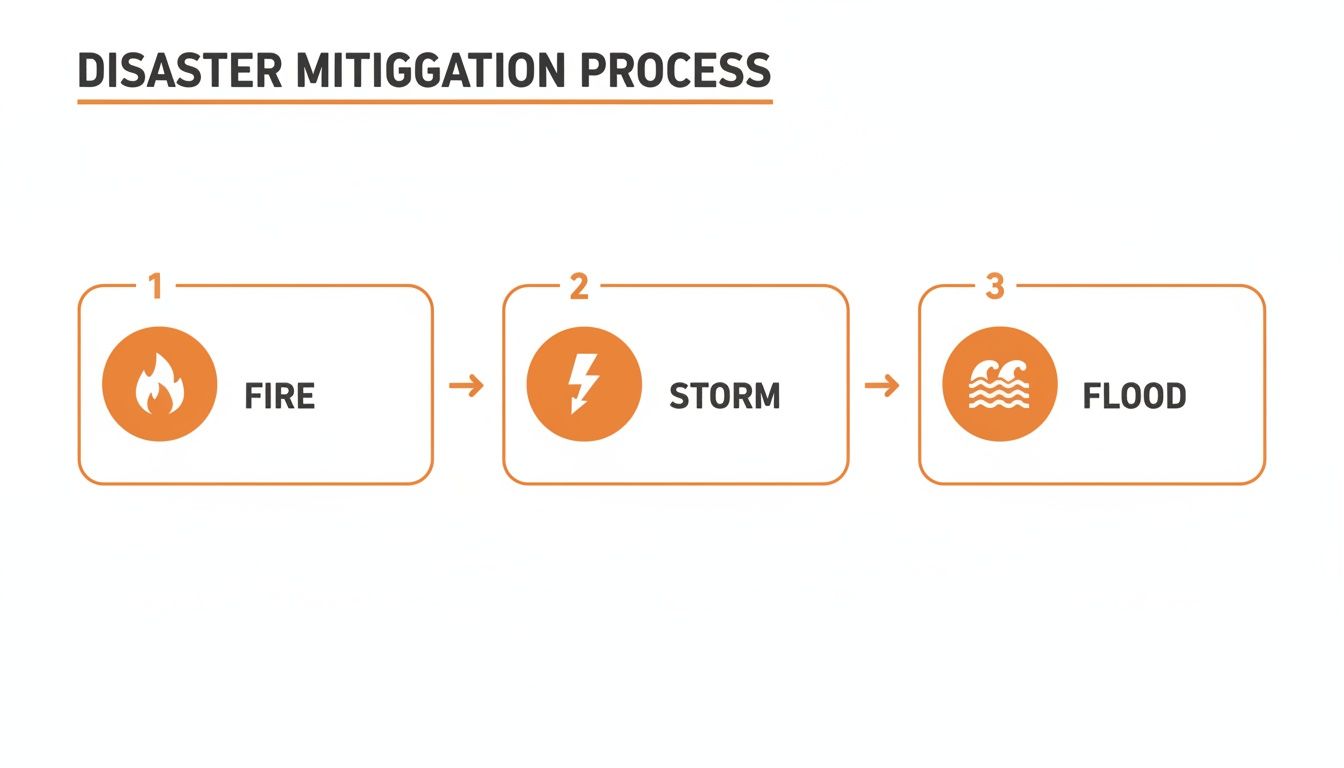
While the source of the damage changes, the need for immediate, proactive steps never does. Let's dig into what these actions look like on the ground.
After a Major Storm
When high winds, hail, or falling trees hit, the damage is usually obvious and immediate. The first priority is simple: seal the property to protect the interior from the elements and keep it secure.
Key storm mitigation actions include:
- Emergency Roof Tarping: This is priority number one for a damaged roof. A professionally installed tarp stops water from pouring into the attic and home, preventing collapsed ceilings, ruined insulation, and the inevitable mold that follows.
- Boarding Up Windows and Doors: A broken window is an open invitation for rain, wind, and theft. Boarding up these openings protects the property from more damage and secures the site.
- Removing Fallen Trees: A tree leaning on a house or blocking a driveway is a ticking clock. Safely removing it relieves structural stress and clears the way for emergency services and inspectors to do their jobs.
The financial impact here is massive. Research from the Insurance Institute for Business & Home Safety (IIBHS) shows that timely tarping and temporary repairs on storm-damaged properties cut secondary water intrusion claims by an average of $15,000 per home.
After a Fire or Flood
Fire and water damage might seem completely different, but the immediate mitigation goals are surprisingly similar. It’s all about removing the harmful stuff and stabilizing the environment. Fast.
After a fire, the real enemies are the smoke and soot left behind. After a flood or burst pipe, it’s the water and humidity you’re racing against.
Immediate actions should include:
- Securing the Property: Fires and floods can destroy the integrity of doors, windows, and walls. Boarding up the property isn't just about security; it’s about preventing liability issues on an unsafe site.
- Water Extraction: In a flood, getting the standing water out within the first 24-48 hours is non-negotiable. It’s the single most effective way to stop water damage in its tracks and prevent mold from taking hold.
- Initial Debris Removal: Clearing out soggy, burnt, or contaminated materials helps ventilate the space and gets it ready for professional drying and cleaning crews.
Taking these tangible steps helps you fulfill policy obligations and, more importantly, start bringing order back to the chaos. For a closer look at managing this process, see our guide on how Fox Claims brings order to storm chaos.
Immediate Mitigation Actions vs. Permanent Repairs
It’s crucial to understand the line between immediate, necessary mitigation and permanent repairs that require an adjuster's full approval. Acting on the first is required; jumping ahead to the second can create major coverage headaches.
This table breaks down the difference.
| Damage Type | Recommended Mitigation Action (Immediate) | Permanent Repair (Requires Approval) |
|---|---|---|
| Roof Damage | Professional tarping to prevent water intrusion. | Full roof replacement or shingle repair. |
| Water Intrusion | Water extraction, dehumidification, removing wet drywall. | Rebuilding walls, installing new flooring. |
| Broken Windows | Boarding up openings to secure the property. | Ordering and installing new custom windows. |
| Fire Damage | Securing the site, initial debris removal. | Structural repairs, smoke remediation, full rebuild. |
| Fallen Tree | Removing the tree from the structure or driveway. | Landscaping, repairing structural damage from impact. |
The key takeaway? Mitigation is about stabilization and preventing further loss. The goal is to stop the bleeding, not to perform the final surgery. That comes later, once the claim is fully scoped and approved.
The Step-by-Step Mitigation Workflow
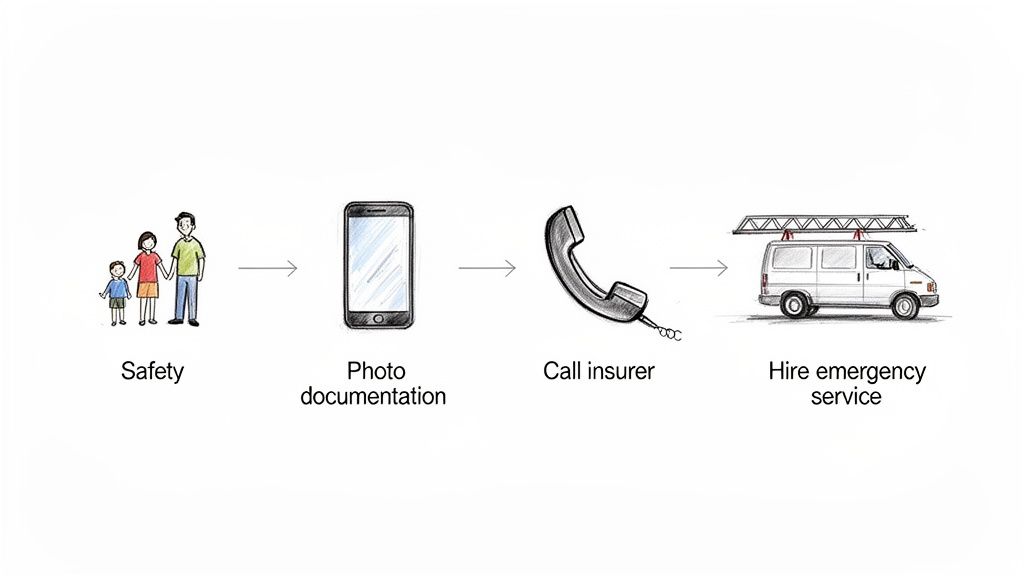
When disaster strikes, the first few hours are pure chaos. Knowing what to do—and just as importantly, what not to do—can make or break the entire claim.
An effective mitigation workflow isn’t just a checklist. It’s a roadmap for homeowners and adjusters to work together, cut through the confusion, and get the recovery process moving.
Think of it like a relay race. The homeowner runs the first leg, securing the property and handing off critical intel. The adjuster takes the baton, deploying resources and setting the claim in motion based on that first report.
The Homeowner's First Steps
As the property owner, your actions in the first few hours are everything. Your job is to stop the bleeding and open the lines of communication.
- Safety First. Always. Before you even think about the property, make sure everyone is safe. If you see immediate hazards like downed power lines, smell gas, or see structural collapse, get out and call 911. The property can wait.
- Document Everything. Grab your phone. Take photos and videos of the damage before anyone touches anything. You need to capture the source of the problem—like the gaping hole in the roof—and the resulting damage, like the water-soaked floors below. This initial evidence is gold.
- Call Your Insurer Immediately. This is non-negotiable. Calling the claims hotline officially starts the clock and fulfills your duty to provide prompt notice of a loss.
- Get Emergency Help. If you need to stop active damage, like a roof leak, call a reputable emergency services contractor. For roof damage, this usually means getting a professional tarp installed. If you're not sure what to look for, our guide on emergency roof tarping services breaks it down.
The Adjuster's Workflow
Once that first call comes in, the adjuster's workflow kicks off. The goal is to verify the situation, authorize the right actions, and start building a clean claim file from moment one.
This process is all about clear instructions and rapid action.
An adjuster’s effectiveness hinges on quickly turning a homeowner’s initial report into actionable steps. This means dispatching the right partners and using early documentation to set accurate initial claim reserves.
This collaborative handoff transforms a chaotic mess into a structured response. When the homeowner and adjuster are on the same page, mitigation in insurance does exactly what it's supposed to: protect the property, prevent more damage, and pave the way for a faster, smoother claim.
How Rapid-Response Services Accelerate Your Claim
In the first few hours after a disaster, chaos reigns. Speed is everything. While homeowners can and should take initial steps, some jobs are just too big, too complex, or too dangerous to handle alone. This is exactly where specialized rapid-response services become a game-changer for your claim.
Think of these crews as the special forces of property damage. Carriers often deploy these professional teams to tackle the tough, high-risk work that stops a bad situation from getting exponentially worse. They bring immediate stability when it’s needed most, handling challenges that are far beyond a homeowner's capability.
Boots on the Ground When It Matters Most
So what do these teams actually do? They get ahead of the immediate risks that cause massive secondary damage, protecting both the property and the integrity of the claim file.
Key services provided by rapid-response teams often include:
- Tarping Steep and Tall Roofs: A simple, one-story roof might be a DIY job. But safely securing a tarp on a steep two-story roof, especially in wet and windy conditions, is a task for trained professionals with proper safety equipment.
- Removing Fallen Trees: A massive tree crashing through a roof isn't just debris; it's a serious structural problem. These teams have the heavy equipment and expertise to remove it safely without causing even more damage to the home.
- Securing Complex Damage: After a severe fire or storm, a property needs to be professionally boarded up and secured. This prevents further weather intrusion, theft, and liability issues down the road.
The value of getting this done professionally and immediately is enormous. Data from past catastrophe events shows that properties with rapid mitigation services have drastically lower overall claim costs. For instance, following major hurricanes, properties left unmitigated saw claims averaging $250,000. Those with swift, professional tarping and tree removal? Their claims averaged just $80,000. That’s a huge difference tied directly to stopping secondary damage in its tracks. You can read more about insurance industry trends and how they are defining the future on OneInc.com.
By deploying a professional team, the insurer isn't just protecting the property; they are protecting the claim itself. This action provides a clear, documented starting point, preventing disputes over what damage was caused by the initial event versus what occurred later due to inaction.
This professional "first response" provides the clean data and immediate stability needed to move a claim forward without getting bogged down. For carriers needing this level of immediate support, services like Fox Claims provide inspectors on demand to get boots on the ground fast, bridging the gap between disaster and resolution.
Ultimately, these services shorten the entire claim cycle, getting everyone back to normal that much sooner.
Documenting Your Mitigation Efforts for Reimbursement
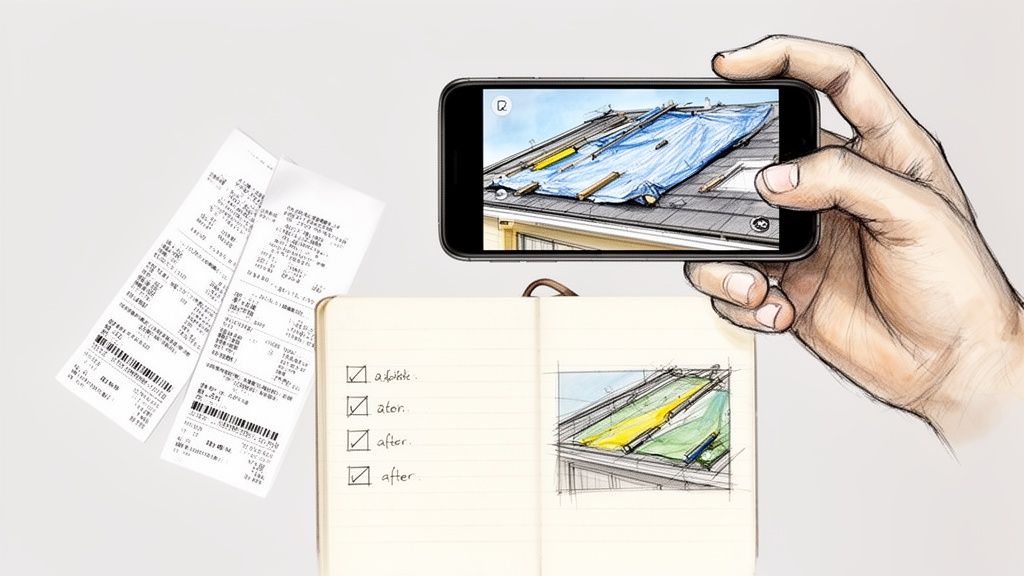
Taking fast action to mitigate damage is only half the battle. The other half? Proving you did it. Getting reimbursed for the costs of mitigation in insurance comes down to one simple, powerful rule: document everything.
Every photo you take and every receipt you save is proof that you upheld your end of the policy agreement. It shows you acted responsibly to protect the property from further harm.
This isn't just about creating a paper trail. It's about giving the claims adjuster a clear, indisputable record of your actions. Good documentation removes all the guesswork and helps prevent disputes over whether your emergency repairs were necessary or reasonably priced.
Think of it like you're building a case. The better your evidence, the smoother the entire claims process will be.
Creating an Ironclad Record
Your documentation needs to tell the full story—from the moment the damage occurred to the steps you took to stop it. The goal is to prove what happened, when it happened, and what you did about it, both visually and financially.
Grab your smartphone as soon as it's safe. Before anyone touches anything, you need to capture the initial damage from every possible angle. These "before" photos are absolutely critical.
- Photographs and Videos: Get wide shots to establish the scene, then move in for close-ups of the specific problem, like the exact hole in the roof or the burst pipe. If you’re shooting video, narrate what you’re seeing in real time.
- "After" Documentation: Once a temporary repair is in place—like a roof tarp—take another round of photos. This proves you took the right steps to prevent the damage from getting worse.
- Invoices and Receipts: Keep every single receipt. It doesn’t matter if it’s from a professional water extraction company or for a tarp and some plywood you bought at the hardware store. These are non-negotiable for reimbursement.
A well-documented mitigation effort leaves no room for ambiguity. It draws a clear line from the initial peril to your reasonable response, making the reimbursement process straightforward and fair.
Tracking Communication and Costs
Beyond photos and receipts, a simple logbook or digital note can be your most valuable tool. Every time you talk to someone about your claim, write it down. Track the date, time, who you spoke with, and what was discussed.
This one habit can eliminate frustrating "he-said, she-said" arguments down the road.
Your careful records ensure you are fairly paid back for every reasonable step you took to mitigate the loss. It solidifies your claim and, ultimately, speeds up your financial recovery. For more tips, check out this detailed guide on creating a property inspection report template.
Common Questions About Mitigation in Insurance
When property damage strikes, confusion can set in fast. But understanding your role—and your policyholder's—in the mitigation process brings much-needed clarity. Here are the straight answers to the questions we hear most often, so you and your customers can act with confidence when it counts.
Will Insurance Pay for Mitigation Services?
Yes. Nearly all standard property policies cover the "reasonable costs" of emergency mitigation. Think about it from the carrier's perspective: spending a few hundred dollars on an emergency roof tarp is far better than paying tens of thousands to fix widespread water damage, collapsed ceilings, and mold that follows.
The key is that the costs must be directly tied to preventing further covered damage. This is why it's critical for homeowners to keep every receipt and document the work. It’s also why they should always notify their insurer as soon as they call in an emergency crew.
What Happens If I Don't Mitigate the Damage?
Failing to mitigate is one of the fastest ways to put a claim in jeopardy. Every policy includes a "duty to mitigate" clause—it’s not a suggestion, it's a contractual requirement. If a homeowner ignores a leaking roof and lets more rain pour in, the carrier has grounds to deny coverage for all the secondary damage that resulted.
The argument is simple: the new damage, like ruined drywall or spreading mold, was preventable. It wasn't a direct result of the initial storm. This can slash the final settlement, leaving the policyholder responsible for thousands in avoidable repairs.
How Do I Find a Reputable Emergency Mitigation Company?
After a major storm, the "storm chasers" come out in full force. Homeowners should be extremely wary of any contractor who shows up unannounced offering to start work immediately. The best first move is always to ask the insurance carrier for a list of vetted, trusted emergency service partners.
If the homeowner has to find a company on their own, they need to look for established, local businesses with solid reviews and proper credentials. A reputable pro will always:
- Provide a clear, detailed written estimate without any high-pressure sales tactics.
- Explain exactly what work needs to be done and why.
- Never demand the entire job be paid for upfront or ask a homeowner to sign over their insurance rights.
To cut through the noise and guarantee quality, many carriers dispatch a trusted rapid-response partner directly. This ensures the mitigation in insurance is handled correctly from the very start, protecting the property and the integrity of the claim.
When you're dealing with high-risk, steep-roof, or complex damage that needs professional eyes now, you need a partner built for speed and expertise. Fox Claims Consultants LLC delivers nationwide emergency tarping, temporary repairs, and rapid damage assessments to stabilize properties and get claims moving. Contact Fox Claims to get boots on the ground fast.
Leave a Reply