
A steep roof claim lands in the queue after a hail event. The insured wants answers today. The field adjuster gets to the property, looks up, and sees a two-story slope with limited ladder placement, wet shingles, and a chimney line that blocks a clean path to the damaged area.
That’s the moment when a routine property claim stops being routine.
For carriers and adjusters, this isn’t just a field logistics problem. It’s a liability, cycle time, and documentation problem. If the adjuster climbs and gets hurt, the file changes fast. If nobody climbs, the claim stalls. If the roof is inspected poorly, the estimate and coverage decision start on a weak foundation. In such cases, ladder assist companies matter. Used correctly, they are not a simple vendor add-on. They are a practical way to control exposure while keeping the claim moving.
When a Simple Claim Becomes a High-Risk Climb
The claims file usually doesn’t say “this one is about to get expensive.” It says wind, hail, tree strike, leak, or disputed roof damage. The trouble shows up at the property.
A steep roof, a tall elevation, soft ground around the structure, or debris from the storm can turn a normal inspection into a bad decision waiting to happen. The adjuster still needs the same things as always: clear photos, accurate observations, and a supportable scope. But the path to getting them changes.
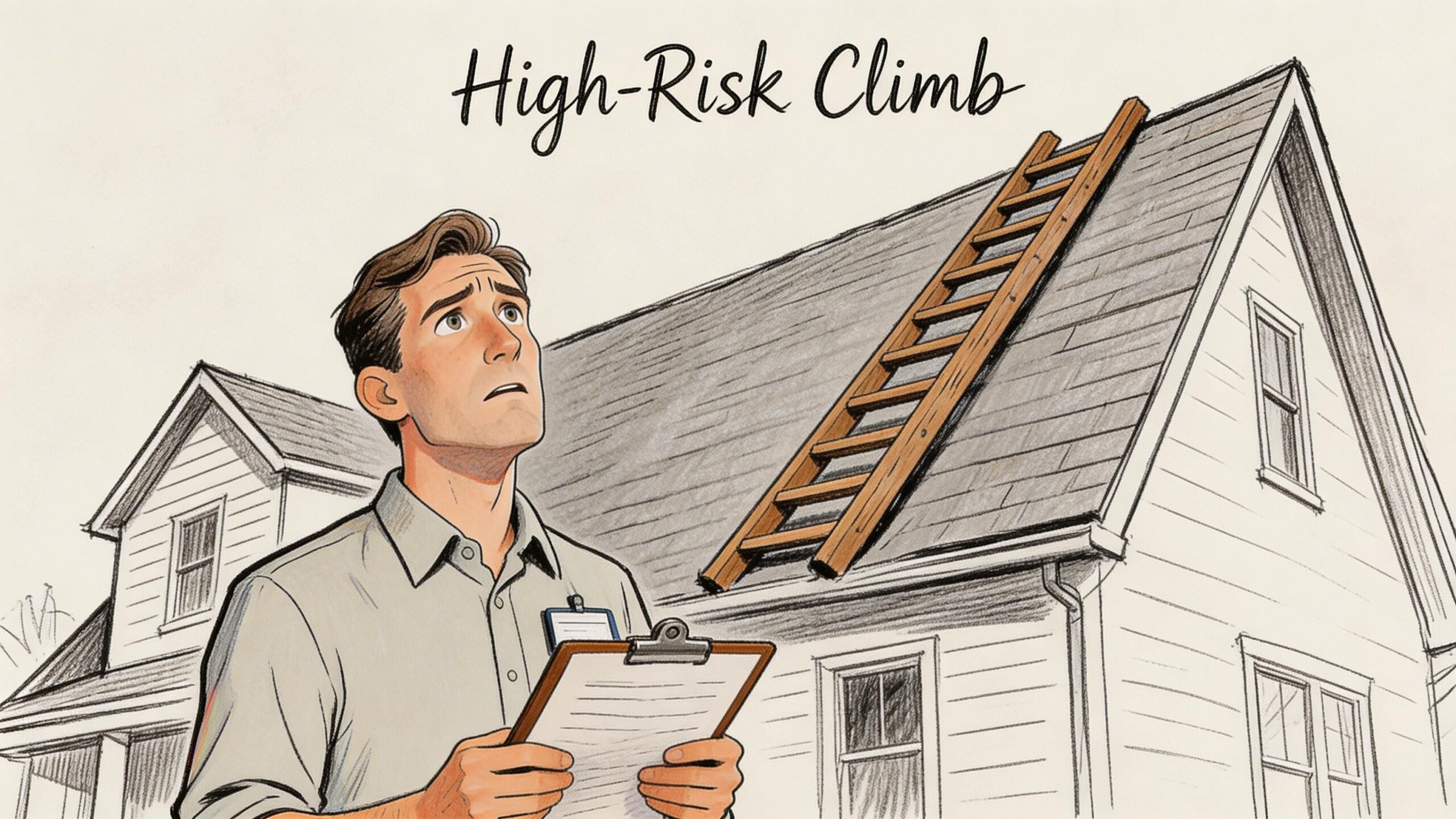
The point where carriers have to decide
In practice, there are only a few options:
- Send the adjuster up anyway. That can expose the carrier to unnecessary risk.
- Inspect from the ground only. That often leaves too many unanswered questions.
- Delay the inspection until conditions improve. That slows the file and frustrates everyone.
- Use a ladder assist company. That shifts the roof access work to trained personnel equipped for it.
Practical rule: If the roof access itself becomes the hardest part of the claim, the claim needs a different inspection model.
The market grew because the need became obvious. In 2014, ladder assist companies collectively earned an estimated $350 million in revenue, up from just one official provider in 2004, and the industry had grown to more than 20 companies by 2014 according to this ladder assist industry review. Carriers didn’t create that demand by accident. They created it because steep and tall roof claims needed a safer, faster field solution.
Why this changes the claim strategy
A good ladder assist assignment doesn’t just get someone onto the roof. It improves the quality of the claim file. The technician reaches the areas the desk adjuster needs documented, captures the condition of accessories and roof surfaces, and gives the handling team a record they can work from.
That matters on losses involving vents, skylights, chimney flashing, and similar details where the damage question is rarely answered from the driveway. Even something as ordinary as a replacement roof vent cover for an RV camper points to the larger truth in claims handling: components located at height create documentation problems when nobody can safely access them.
What works and what doesn’t
What works is simple. Use ladder assist early when roof access is questionable.
What doesn’t work is pretending the adjuster can “make it work” on a roof that clearly calls for specialized access. That usually leads to one of three outcomes: a safety issue, an incomplete inspection, or a second trip. None of those help the carrier.
What Is Ladder Assist and When Do You Need It
A claim can look routine until the roof access changes the economics of the file. The adjuster arrives, confirms visible exterior damage from the ground, then runs into a steep pitch, a second-story tie-in point, or debris left by the storm. At that moment, the question is no longer just who can get onto the roof. It is whether the carrier wants added injury exposure, incomplete documentation, and a likely reinspection.
Ladder assist is a specialized field service that provides safe roof access, condition documentation, and inspection support for property claims. The technician handles the climb, captures what the file needs, and gives the adjuster usable roof-level evidence to support scope, causation, and settlement decisions. For carriers, that has a clear purpose: reduce liability, shorten cycle time, and improve the accuracy of the claim record.
What the service includes
Ladder assist companies typically support carriers, independent adjusters, and TPAs with field tasks such as:
- Safe roof access on steep, high, or awkward structures
- Photo and video documentation of shingles, flashing, vents, ridges, valleys, and other roof components
- Measurements and condition notes that support estimating and file review
- On-site observations that help the adjuster decide whether more expert evaluation is needed
- Inspection reporting delivered in a format the handling team can act on quickly
Some assignments also involve solar panels, multi-level elevations, fragile roofing materials, limited ladder placement, or access points blocked by landscaping, fencing, or detached structures.
The practical value is simple. Ladder assist helps the claim move on the first visit instead of creating a second trip because the original inspection stopped at the gutter line.
Clear signs you should order ladder assist
The best time to decide is before dispatch, not in the driveway.
Use ladder assist when one or more of these conditions are present:
- Steep pitch that pushes the inspection beyond ordinary field access
- Multi-story height or eave lines that increase fall exposure
- Complex roof design with dormers, intersecting slopes, valleys, or poor ladder setup options
- Storm hazards such as wet surfaces, loose granules, tree debris, damaged decking, or unstable edges
- Fragile features including brittle materials, skylights, solar equipment, or delicate appurtenances
- High claim volume where fast access support keeps files from stalling in queue
This is also a file-quality decision. If the adjuster cannot safely verify the condition of roof accessories, transitions, and slope-specific damage, the claim record gets weaker. Weak records lead to supplements, disputes, and avoidable reinspections.
The operating test
A useful rule is this: order ladder assist when roof-level evidence is necessary and ordinary adjuster access is questionable.
That threshold comes up more often than some teams expect. A roof does not have to be extreme to justify a specialist. It only has to create enough access risk, delay, or documentation uncertainty that the carrier gains more from a trained field partner than from sending the adjuster up alone.
| Claim condition | Better approach |
|---|---|
| Low-pitch, single-story roof with clear and safe access | Standard field inspection may be enough |
| Steep slope or limited ladder placement | Ladder assist usually improves safety and file quality |
| Tall structure with multiple elevations | Use ladder assist to reduce exposure and avoid return trips |
| Storm-damaged roof with debris or instability | Assign access support before inspection proceeds |
Even experienced field adjusters carry tools for standard site work, including a magnetic torpedo level used for basic field measurements. That does not change the access decision. The question is whether the roof can be inspected safely, documented thoroughly, and closed efficiently with the resources already assigned.
When ladder assist is unnecessary
Some claims do not need another vendor. A low, accessible roof in stable conditions may be inspected safely by the assigned adjuster without adding cost or another handoff.
That trade-off matters.
Used too late, ladder assist becomes a cleanup step after an incomplete inspection. Used too broadly, it adds expense where ordinary access would have worked. Used at the right trigger points, it protects the adjuster, gives the carrier stronger documentation, and keeps the file moving with fewer surprises.
Understanding Safety Standards and Certifications
A steep-roof claim can look routine in the assignment system and become a liability problem the moment someone sets a ladder. That is why safety standards and certifications matter. They protect the technician, but they also protect the carrier from preventable incidents, weak documentation, and disputed findings.
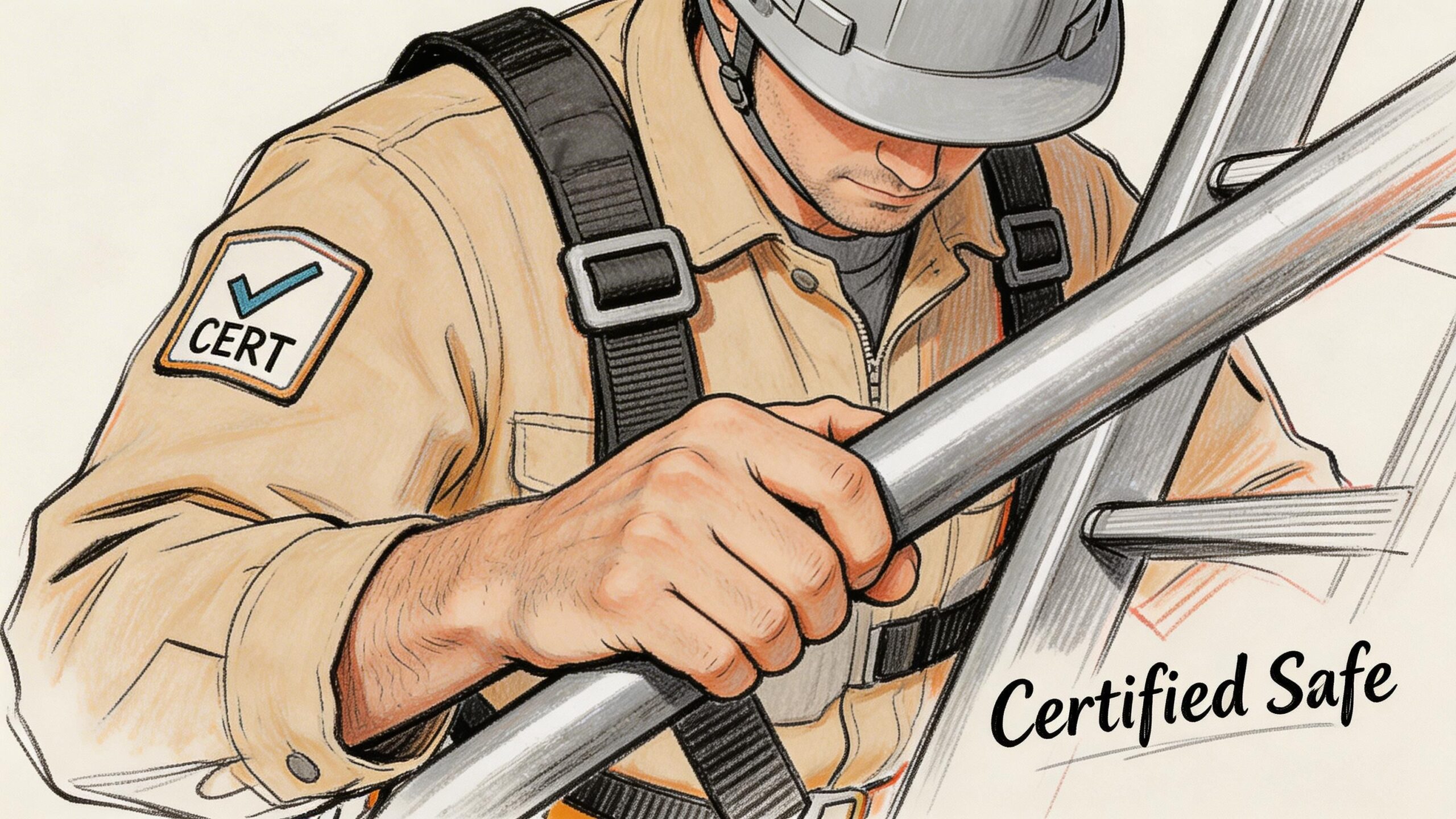
A carrier buying ladder assist is buying controlled roof access and usable field evidence. If a vendor cannot show how technicians are trained, what equipment they deploy, and how they document conditions, the assignment carries more risk than it should.
Equipment standards affect both safety and file quality
Serious ladder assist vendors use equipment built for steep access, not improvised ladder work. Common examples include roof anchors, traction footwear such as Cougar Paws, steep-assist devices, pitch hoppers, full-body harnesses, lifelines, and rope-grab systems.
That gear matters for a practical reason. It lets technicians maintain stable positioning, inspect more of the roof surface, and capture better photos and measurements without rushing the climb.
The result is usually a cleaner file. Better access leads to better observations, and better observations reduce reinspection requests, coverage disputes, and avoidable supplements.
A roll of reflective conspicuity tape used for visible site marking makes the broader point. Safe field work depends on visible hazards, controlled setup, and repeatable procedure.
Certifications show whether the vendor can support claim decisions
Roof access alone does not make a ladder assist assignment successful. The technician still has to recognize relevant damage, separate wear from storm effects, and record conditions in a way the desk adjuster or field adjuster can use.
HAAG certification is one strong signal because it shows formal inspection training. It is not the only factor, but it helps carriers identify vendors that understand roofing systems, slopes, components, and damage patterns. OSHA fall-protection training matters for a different reason. It shows the company has addressed jobsite exposure with defined safety practices instead of relying on individual judgment.
The strongest vendors can explain their training path in plain language. They can also show written procedures for ladder placement, tie-off methods, photo capture, measurements, and incident reporting.
What to verify before assignment
Ask for specifics, not general assurances.
| What to verify | Why it matters |
|---|---|
| Fall protection training | Reduces the chance of preventable field incidents |
| HAAG or comparable inspection training | Improves the quality of damage identification and documentation |
| Steep-roof equipment list | Confirms the vendor can handle the actual roof condition assigned |
| Reporting standards | Keeps deliverables consistent across claims and regions |
| Insurance coverage and incident process | Limits carrier exposure if something goes wrong |
| Photo and measurement protocol | Helps the adjuster review the file without requesting a second trip |
The safest vendor is the one that can demonstrate how its technicians work, what they carry, and how they document the inspection.
The video below gives useful visual context for the kind of roof access discipline carriers should expect from a professional field partner.
What works in the real world
On a rotation panel, the vendors worth keeping tend to be predictable. They arrive with the right gear, follow a defined access process, and return documentation that supports the claim decision. That consistency has a direct return. It lowers injury exposure, reduces rework, and helps files close faster with fewer questions from reviewers, insureds, or contractors.
Credential ambiguity creates the opposite outcome. If a company cannot clearly explain technician training, anchoring methods, equipment standards, and reporting procedures, the carrier is accepting unnecessary risk for very little savings.
What to Expect During a Ladder Assist Inspection
A ladder assist inspection often decides whether a claim moves cleanly or stalls for days. When an adjuster reaches the site and the roof is too steep, too high, too wet, or too damaged for a standard inspection, the next hour matters. A disciplined ladder assist process protects the people on site, gives the carrier a usable record, and cuts down on repeat visits that add cost and liability.
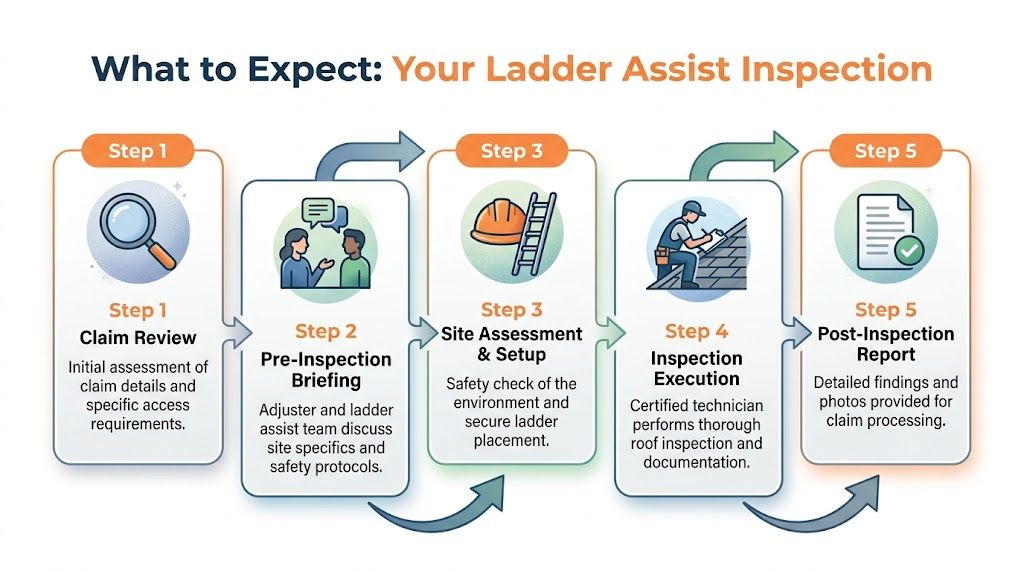
The inspection flow on a typical claim
On a standard assignment, the sequence is straightforward:
Claim review
The vendor reviews the assignment details, confirms the property type, identifies access concerns, and clarifies the inspection objective.Pre-inspection coordination
The adjuster and field team align on scope, photo priorities, measurements, and any disputed areas. If the insured or contractor needs to be present, scheduling gets handled before dispatch.Site assessment and setup
The technician evaluates ground conditions, ladder placement, roof pitch, access points, and visible hazards before climbing starts.Roof and exterior inspection
The technician documents the agreed areas, captures photos and measurements, and notes conditions that affect causation, scope, or repairability.Report delivery
The adjuster receives a file that supports a coverage or estimate decision without a second round of basic questions.
That sequence sounds simple because it should be simple. The value is in how consistently the vendor executes it.
What happens before anyone climbs
Strong field teams do their best work before the first step up the ladder.
They check for power lines, soft ground, damaged decking indicators, debris fields, loose gutters, restricted access, and storm-related hazards that can change the inspection plan. On many losses, the roof is only part of the story. Siding, fascia, screens, window wraps, detached accessories, and limb impact points may need to be documented during the same visit so the adjuster gets one usable file instead of several partial ones.
A rushed setup usually leads to a rushed report.
Clear assignment instructions matter here. If the adjuster needs only roof access, that should be stated. If the carrier needs a broader exterior condition record to support scope, reserve accuracy, or subrogation review, that should be stated too. Vague instructions are one of the fastest ways to create callbacks and extend cycle time.
What the technician documents onsite
Good ladder assist documentation is deliberate and claim-focused. Random photos rarely help anyone close a file.
Expect items such as:
- Overview images of each elevation and roof plane
- Close-up photos of storm damage, wear, repairs, or disputed conditions
- Measurements that support estimating and material calculations
- Notes on appurtenances such as vents, skylights, chimney areas, and HVAC penetrations
- Access limitations that explain what could not be safely inspected
- Condition context that helps separate fresh damage from age, traffic, installation issues, or prior loss history
Some assignments also call for video, diagrams, or scan-based documentation so a desk adjuster or reviewer can understand the roof without sending another person out. Field readiness can affect that result more than people realize, including basic equipment decisions such as men’s work boots for rough site conditions, traction, and mobility on mixed surfaces.
What good reporting looks like
The report has one job. Help the adjuster make a decision.
That means organized photo sets, clear labeling by slope or elevation, concise notes, and enough structure to show what was inspected, what was found, and where uncertainty remains. Weak reports create delay because the adjuster has to reconstruct the site visit from unlabeled media and incomplete notes.
Digital workflows can improve that process. Crawford describes how digital assist programs use layered assessments and 3D scanning to speed reporting and improve file accuracy in the field, as outlined in Crawford’s overview of digital assist reporting. The practical takeaway for carriers is simple. Better field documentation reduces supplement disputes, reinspection requests, and internal review friction.
Where adjusters lose time
In my experience, delays usually come from four operational failures:
- Unclear scope at dispatch
- Slow communication around scheduling
- Incomplete or poorly organized photo sets
- Reports that require follow-up calls to explain basic findings
Each one adds cost. Each one also extends the life of the claim.
That is why ladder assist should be measured as more than a safety expense. Used correctly, it is a claims handling tool. It limits field exposure, improves the quality of the initial inspection, and helps carriers reach defensible decisions faster.
What homeowners and contractors notice
They notice whether the site visit looks controlled. They notice whether the technician moves with purpose, documents methodically, and explains the access process clearly.
They also notice whether the claim progresses after the inspection.
That last point affects everyone on the file. A well-run ladder assist assignment gives the carrier a cleaner record, gives the adjuster fewer loose ends, and gives the insured a faster path to an answer.
How to Choose the Right Ladder Assist Partner
Most carrier problems with ladder assist companies don’t start on the roof. They start during vendor selection.
A company can have decent technicians and still be a poor partner if communication is weak, reporting is inconsistent, or surge capacity disappears when the weather gets bad. The right way to vet a vendor is to treat the decision as an operational partnership, not a one-off purchase order.
Don’t let safety claims stay generic
A lot of providers say they improve safety. That’s not enough.
Verified data makes an important point here: many ladder assist companies promote safety, but there is a lack of published data on specific injury reduction metrics or workers’ comp savings. When evaluating a vendor, carriers should ask for any internal data they track on reducing incidents and field exposure, as noted in this analysis of ladder assist blind spots.
That one question separates vendors who measure their own performance from vendors who only market it.
Questions worth asking before onboarding
Use a shortlist that forces specifics:
How do you train and verify technicians?
Ask for the actual process, not a general statement about experience.What does a completed report include?
Request a sample. You want labeling, organization, and useful notes.How do you handle CAT volume?
A vendor that performs well on daily claims may struggle under surge conditions.What happens if access conditions change onsite?
Good partners escalate clearly. Weak ones improvise.What is your communication standard?
You need updates on scheduling, access issues, completed inspections, and report delivery.What insurance and liability documentation can you provide?
This should be easy for them to produce.
Use a scorecard, not a gut feeling
A simple vendor scorecard keeps the decision honest.
| Evaluation area | What strong looks like |
|---|---|
| Safety program | Clear training, documented procedures, verifiable standards |
| Reporting quality | Organized photos, useful notes, consistent output |
| Coverage footprint | Serves the territories you actually need |
| CAT readiness | Can scale without collapsing communication |
| Responsiveness | Fast scheduling and reliable status updates |
The hidden issue is consistency
One strong inspector doesn’t solve a carrier problem. A strong system does.
If you assign the same vendor across multiple states or multiple adjusters, you need the output to look familiar every time. That includes file naming, image sequence, inspection notes, escalation practice, and handoff communication. A provider that sends one excellent report and one messy report is not operationally reliable.
A useful way to think about it is the same way you’d evaluate remote property documentation tools. You wouldn’t onboard a surveillance product like an indoor vandal-proof dome IP camera without checking image quality, deployment fit, and recording consistency. Ladder assist should be vetted with the same discipline.
Vendor selection should answer one question clearly: when this company touches a claim, does the file get easier to handle or harder?
That’s the standard.
Real-World Scenarios and Pricing Models Explained
The value of ladder assist becomes clearer when you stop talking about roofs in the abstract and look at the claims that usually bog down.
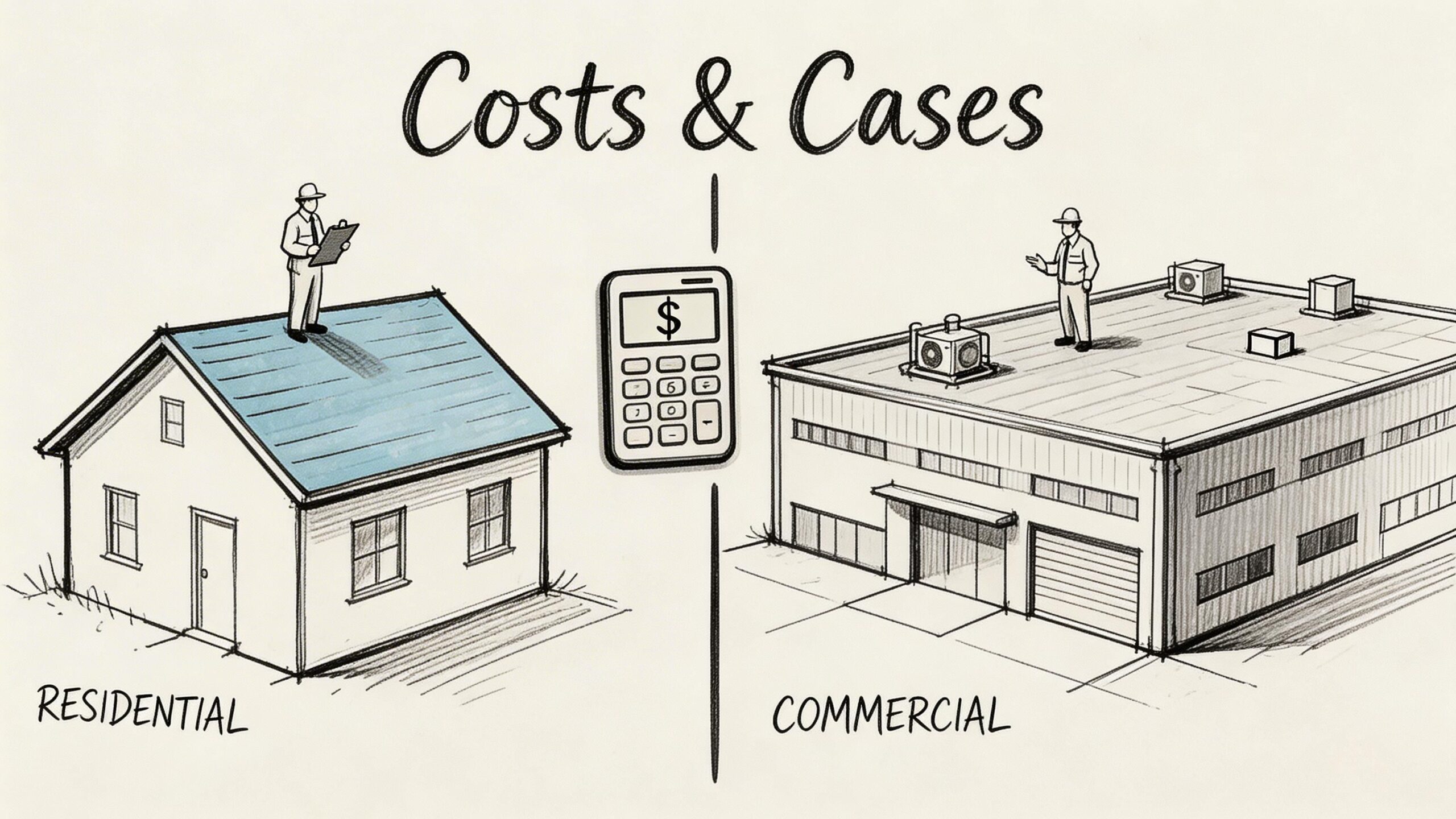
Scenario one with a residential steep roof
A hail claim comes in on a tall home with multiple dormers, a steep rear slope, and limited rear-yard access. The adjuster can inspect the lower elevations from the ground, but the key damage question is on the upper rear plane.
This is a good ladder assist assignment because the claim doesn’t need guesswork. It needs controlled access and clear roof-level photos. The practical outcome is simple: the adjuster gets evidence from the relevant surfaces without making a risky climb or rescheduling the claim.
Scenario two with fragile or obstructed roof features
Tree impact claims often create a different problem. The roof may be accessible in theory, but the route involves unstable debris, damaged decking, or awkward movement around skylights and chimney structures.
In these files, ladder assist helps because the technician can approach the roof as an access problem first and a documentation problem second. That sequence matters. A rushed inspection on a compromised roof usually produces weak evidence and a nervous adjuster.
Scenario three with commercial conditions
Commercial losses often need less drama and more discipline. Low-slope sections, multiple elevations, rooftop equipment, and long walking paths can turn a short inspection into a long day if the access plan is poor.
A ladder assist partner can support those assignments when the adjuster needs roof-level verification but doesn’t need to personally traverse the structure. The value there is operational. Fewer field complications usually mean a cleaner report and faster estimate review.
How pricing is usually framed
The market often talks about flat-fee pricing for ladder assist. That’s useful because it makes vendor cost more predictable than open-ended hourly field work.
The key is to look past the line item and ask what the fee includes:
- Basic access and roof documentation
- Exterior elevations and appurtenance photos
- Measurements or diagrams
- Rush scheduling
- CAT deployment
- Add-on emergency services such as tarping or temporary protection
A low fee can be expensive if it buys a weak report. A higher fee can be reasonable if it prevents a reinspection, dispute, or extended delay.
The trade-off carriers should focus on
The key pricing question isn’t “what does the inspection cost?” It’s “what does this assignment cost if we handle access poorly?”
That includes avoidable delay, incomplete evidence, follow-up site visits, contractor disputes, and internal handling time spent reconstructing what the first inspection should have documented.
Answering Your Top Ladder Assist Questions
Carriers and adjusters usually end up asking the same few questions. The answers are straightforward when you frame ladder assist as a claim operations tool instead of a field convenience.
Is ladder assist worth the cost
Usually, yes, when the roof access issue is real.
Verified data notes that flat fees are often advertised in the $300-$800 range per inspection, while the average cost of a single adjuster fall injury can exceed $50,000. The same source notes that complex roofs can cause 20-30% claim delays, which adds another hidden cost to handling difficult access the wrong way.
That doesn’t mean every claim needs it. It means the fee should be compared against total exposure, not just field expense.
Who is liable if the technician damages the property
That depends on the vendor’s contract terms, insurance, and operating procedures. Don’t assume the answer. Ask for documentation before assignment volume builds.
The right practice is to verify liability coverage, incident reporting protocol, and how property damage claims are handled. If a company can’t explain that clearly, it’s not ready for carrier work.
When is ladder assist not necessary
It’s usually unnecessary on low-risk roofs with safe access, stable conditions, and an adjuster who can inspect competently without specialized support. In those cases, adding another vendor can create friction instead of removing it.
The key is to reserve ladder assist for claims where access difficulty threatens safety, documentation quality, or cycle time.
What should the adjuster expect from the file
Expect a report that helps answer claim questions. That means organized images, useful notes, and enough roof-level evidence that a desk reviewer can understand the condition without chasing the field team for clarification.
If the report forces a second inspection or a long explanation call, the ladder assist assignment didn’t do its job.
How should carriers think about ROI
Use a simple framework:
- Safety exposure avoided
- Delay avoided
- Reinspection risk reduced
- Better documentation for claim decisions
- Less field stress on adjusters
That’s the practical ROI. Not every part of it shows up on one invoice, but it shows up in claim performance.
If you need a field partner for steep roofs, tall elevations, storm damage, tree impact, ladder assist, or emergency site support, Fox Claims Consultants LLC provides nationwide property inspection services built around clear documentation, safety-focused fieldwork, and fast reporting for carriers, adjusters, and policyholders.
Leave a Reply