
A storm hits overnight, and by morning the claim queue is stacked. Policyholders want answers now. Desk adjusters need site conditions confirmed, emergency mitigation started, and clean documentation in hand before the file drifts into delay, supplement fights, and frustration.
That’s where most vendor lists fail. A list gives you names. It doesn’t give you readiness, consistency, or a shared way of working when roofs are steep, trees are on structures, and temporary repairs need to happen before the next rain band rolls through.
A certified contractor network matters because claims work isn’t just about finding someone who can swing a hammer. It’s about deploying people who can inspect safely, document accurately, communicate clearly, and fit into a claims workflow without creating more friction than they remove. In practice, the network becomes part of your operating model. When it’s built and managed well, it shortens decision time, helps contain loss, and gives homeowners a repair path they can trust.
Bringing Order to Post-Storm Chaos
The first 48 hours after a major storm expose every weakness in a claims operation. Call volume spikes. Field access gets tight. Contractors get booked fast. The wrong assignment can leave a home sitting open to weather while everyone argues about scope, causation, and who’s going to show up.
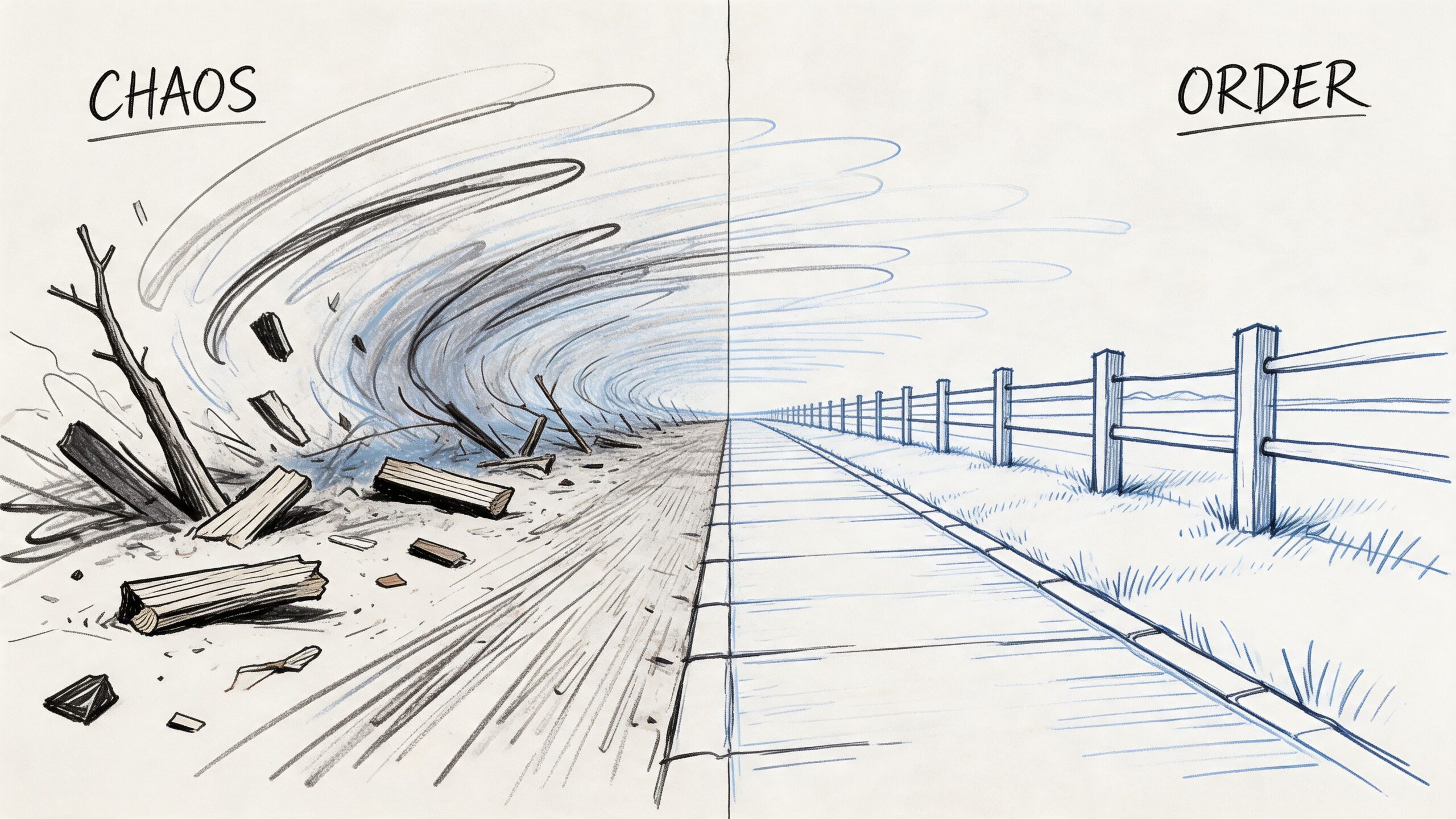
In that environment, the best claims teams stop thinking in terms of isolated vendors. They think in terms of a managed response capability. A certified contractor network gives them a structured way to dispatch emergency tarping, ladder assist, tree impact assessment, temporary repairs, and follow-up inspection work without rebuilding the process on every file.
A small operational detail often reveals the difference. One contractor sends blurry photos and a vague invoice. Another sends timestamped images, notes access limitations, identifies active water entry points, and flags whether the structure is safe for further inspection. Both may be skilled tradespeople. Only one is helping the claim move.
For high-risk roof and exterior work, discipline matters as much as trade skill. Teams handling storm response often rely on field-ready equipment and site processes built for rough conditions, not improvised workarounds. Even routine support gear such as roof care and cleanup tools used around exterior service work points to a broader truth. Claims outcomes improve when field work is organized before crews ever arrive.
A surge event doesn’t reward the cheapest name on a spreadsheet. It rewards the team that can arrive, stabilize, document, and report without supervision.
That’s the practical value of a certified contractor network. It replaces scramble with sequence. It gives carriers, adjusters, and homeowners a workable path through the mess.
What Exactly Is a Certified Contractor Network
A true certified contractor network is closer to a managed talent pool than a public directory. A directory tells you who exists. A network tells you who has been vetted, trained, and monitored to perform inside a defined standard.
That distinction matters. In claims, the issue usually isn’t whether contractors are available somewhere in the market. The issue is whether they can be trusted to enter a live file and perform in a way that supports coverage decisions, mitigation timelines, and policyholder communication.
A network is active, not passive
A simple vendor list goes stale fast. Licenses change. insurance lapses. Crews turn over. Service quality drifts. A real network keeps managing those variables instead of assuming last year’s approval still means today’s readiness.
That’s why the concept has stayed relevant for decades. Certified Contractors Network was founded in 1996 by Richard Kaller, a roofer who saw that entrepreneurial contractors needed formal business training to scale, and it grew into a consulting and training network with over 25 years of history and a proprietary 5P Process that has helped contractors significantly increase close rates, according to the company profile on ZoomInfo.
For claims professionals, the important takeaway isn’t the sales angle. It’s the operating principle. Networks produce better field performance when members work from a defined process instead of pure improvisation.
The three parts that separate a network from a list
A strong network usually rests on three pillars:
Vetting before assignment: The network verifies whether a contractor belongs in the program at all. That includes baseline business legitimacy, trade fit, and the ability to work in a professional reporting environment.
Training after approval: Entry isn’t enough. Conditions change, products change, carrier expectations change, and crews need continuing instruction if the network is going to stay usable.
Performance management over time: The best networks don’t stop at onboarding. They track responsiveness, documentation quality, complaint patterns, and how well a contractor works inside a repeatable process.
What this looks like in the field
Think about a steep-roof ladder assist after hail. A random contractor might inspect competently, but still create drag if the photos are disorganized, the notes are inconsistent, or the adjuster has to chase basic answers. A networked contractor should already know the reporting standard, communication cadence, and what evidence needs to be captured on the first trip.
Practical rule: If a network can’t explain how it maintains standards after initial enrollment, it’s probably selling access, not accountability.
That’s why “certified” shouldn’t impress anyone by itself. The useful question is what the certification controls, how often it’s refreshed, and whether it translates into predictable performance on actual claims.
The Triple-Win Benefits for Claims Stakeholders
The strongest case for a certified contractor network is operational, not promotional. When the network is built well, each party in the claim gets something concrete out of it: fewer avoidable disputes, cleaner field support, and a smoother experience for the insured.
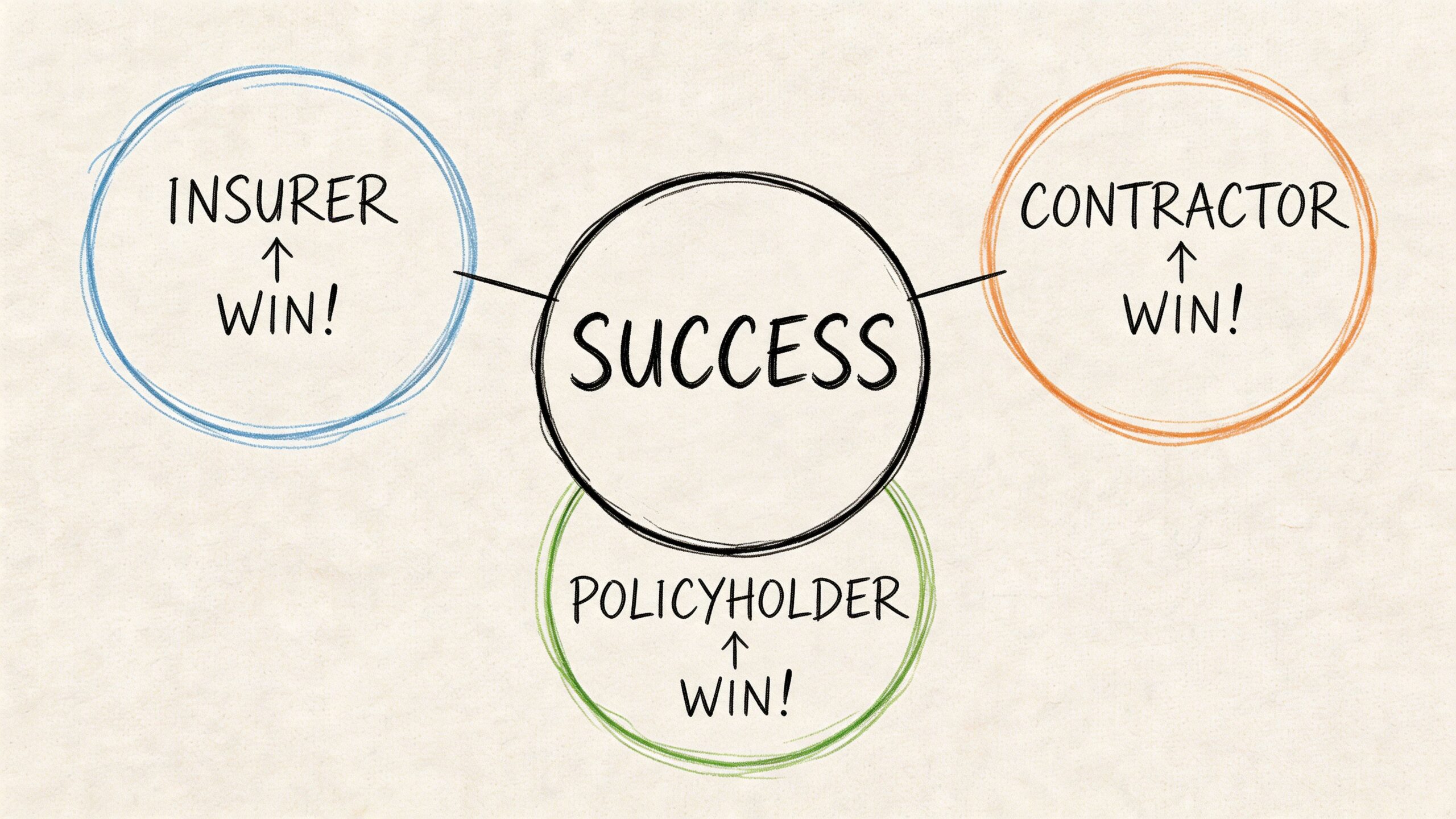
For the insurer
Carriers benefit first from consistency. Files move better when field inspectors and contractors follow the same documentation habits every time. That includes photo sets, scope notes, site condition updates, and status communication that doesn’t require repeated follow-up.
The measurable upside shows up in dispute reduction. Well-structured certified networks can reduce claim disputes by 20 to 30 percent compared to non-certified peers because vetted inspectors follow standardized protocols, as noted on Contractors.net’s CCN about page. Fewer disputes mean less rework, fewer second looks, and fewer files that bog down because the initial field package wasn’t reliable.
There’s also a customer side to this. Policyholders may not know anything about your vendor strategy, but they feel the difference between a coordinated process and a chaotic one. Good field execution protects the claim experience even when the loss itself is stressful.
For on-site operations, carriers also tend to value partners who already think in terms of deployment readiness and work visibility, much like teams that rely on large-area LED work lights for field conditions and site safety. The equipment isn’t the strategy. Preparedness is.
For the adjuster
Adjusters need usable support, not more noise. A reliable network gives them people who understand access issues, know how to work around steep or damaged roofs, and can provide findings in a format that supports decision-making.
The practical wins usually look like this:
- Fewer callbacks: The first report is more likely to answer the obvious questions.
- Safer field support: High-risk inspections are handled by people used to that environment.
- Less file friction: Standard photos and notes cut down on back-and-forth.
- Better predictability: The adjuster learns what to expect from the network’s reporting standard.
An adjuster’s time gets wasted in small chunks. Missing elevations. Unclear measurements. No note on temporary protection. No update that a tree is still loaded on the roof. A managed network reduces that death-by-a-thousand-cuts problem.
For the homeowner
Homeowners don’t evaluate a network by its certification language. They evaluate it by what happens after the first call. Did someone respond quickly? Did the contractor explain the next step? Did the temporary repair hold? Did they feel like the process was moving?
That human side gets overlooked in operational discussions, but it’s where trust is won or lost. A good network lowers stress because the homeowner isn’t left coordinating strangers while the claim is still being sorted out.
| Stakeholder | What they need most | What a strong network delivers |
|---|---|---|
| Insurer | Control and consistency | Standardized field results |
| Adjuster | Clear, usable reporting | Reliable site support |
| Homeowner | Speed and confidence | A more orderly repair path |
A vendor can complete a task. A network can support an outcome. Those are not the same thing.
Decoding Certification Vetting and Standards
After a storm, “certified” gets thrown around fast. A contractor says they’re certified. A network says every member is vetted. On a live property claim, neither statement means much until the standard behind it is clear and enforceable.
That is the test. A certification has claims value only if it tells you who checked what, how often they checked it, and what happens when a contractor falls short.
Baseline vetting should be documented, current, and easy to verify
A serious network should be able to show its entry standards without hesitation. That starts with active licensing where the jurisdiction requires it, current liability coverage, workers’ compensation where applicable, and confirmation that the business is in good standing. If the network cannot produce that record quickly, the problem is not paperwork. The problem is weak oversight.
The stronger networks also vet operating discipline. Property claims put pressure on scheduling, phone response, site documentation, temporary mitigation, and estimate support. I have seen technically capable contractors create avoidable file delays because nobody checked whether their office could process supplements, return adjuster questions, or upload a complete inspection package the same day.
Certification should work the same way any other compliance standard works. Even basic field equipment is judged against an objective benchmark, such as DOT/SAE certified trailer marker lights, because the label only matters when it ties back to a verifiable requirement.
Training matters only when it changes claim handling behavior
Some network training is useful but irrelevant to a property file. Product installation courses have their place. Sales coaching may help the contractor. Claims teams need something else.
They need training that improves inspection quality, jobsite judgment, photo standards, moisture documentation, temporary repair decisions, and communication under deadline. A contractor who understands shingle systems but cannot document uplift, collateral indicators, repairability constraints, or safety limitations is still going to slow the file down.
A useful example comes from the manufacturer side. Owens Corning announced an exclusive partnership with Certified Contractors Network that gives Owens Corning Roofing Contractor Network members access to one-on-one coaching, roundtable discussions, and targeted training programs, according to Roofing Contractor’s coverage of the partnership. For claims professionals, the follow-up question is straightforward. Does that training improve field reporting and decision quality on an active loss?
If the answer is unclear, the certification may still help the contractor’s business. It does not automatically help your claim.
Technical skill and claims readiness are separate standards
A good installer is not always a good claims partner. Those are different jobs with some overlap.
Claims-ready contractors need to capture conditions accurately, recognize safety and causation issues, and communicate in a way that supports coverage evaluation and next-step decisions. That matters most on complex files. Storm losses with steep roofs, multi-trade damage, temporary stabilization needs, or limited site access expose weak standards fast.
Ask the network specific questions:
- What documentation is required on every assignment?
- What specialties are tracked beyond general roofing or restoration?
- How does the network qualify contractors for steep roof work, emergency tarping, or tree impact conditions?
- Who reviews performance after the job is assigned?
- What corrective action happens when reporting is incomplete or unsafe decisions are made?
Those answers tell you whether the network is managing outcomes or just collecting member dues.
The best networks also know their limits. They do not send a general exterior contractor to every storm claim and hope experience fills the gap. They separate installation credentials from field-assist qualifications. On a steep roof inspection or unstable loss site, that distinction protects cycle time, reduces reinspection risk, and limits preventable damage.
Integrating a Network into Your Claims Workflow
A certified contractor network only creates value when it’s wired into daily claims handling. If assignments still move by ad hoc phone calls, scattered emails, and incomplete handoffs, the network won’t fix much. Integration starts with defining what happens at first notice of loss and what happens after the site is stabilized.
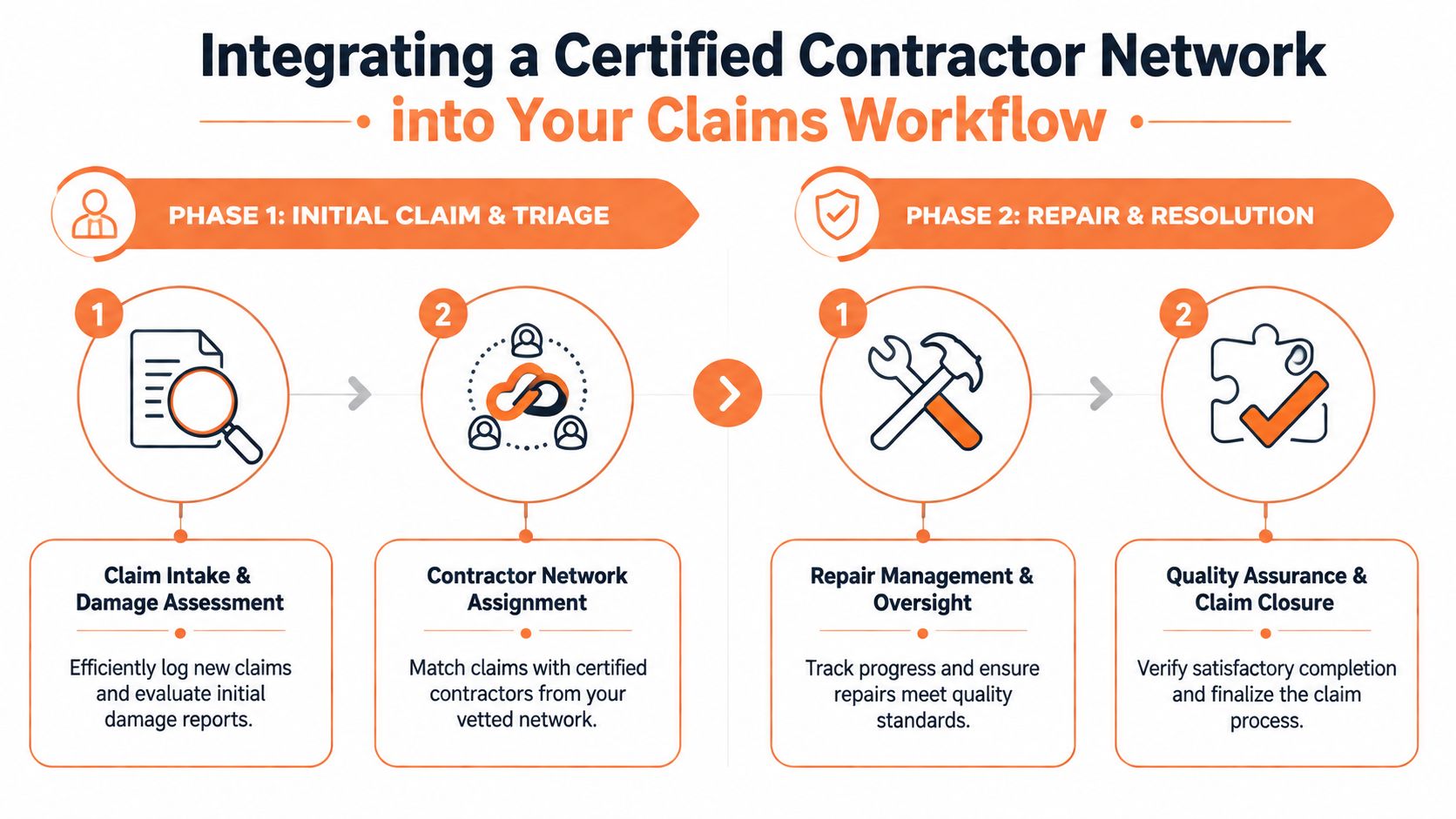
Emergency response needs a dispatch standard
The first phase is triage. When water is entering, a tree is on the structure, or access conditions are hazardous, the network should have a clear intake and dispatch rule set. That means the assignment includes the property address, known hazards, contact path, service requested, and the documentation expected before the contractor leaves the site.
Good emergency deployment usually includes a short operational checklist:
- Confirm urgency level: Is this active mitigation, inspection support, or both?
- Assign by specialty: Don’t send a generalist to a high-risk roof if the file needs ladder assist capability.
- Set reporting requirements upfront: Require photos, site notes, mitigation status, and any safety restrictions.
- Define communication timing: Decide when updates are due and who receives them.
The reason to formalize this is simple. The first field visit shapes the rest of the claim. If the initial contractor misses active openings, fails to document temporary repairs, or leaves unclear notes, everyone behind them pays for it.
Inspection and restoration need repeatable handoffs
Once the property is stabilized, the network’s job changes. Now it needs to support inspection quality, estimate clarity, and repair coordination without blurring lines of authority. Many networks, however, underperform in these areas. They may be good at business coaching, but weak on claim-specific workflows.
That gap is especially important in technical trades. In the Eaton Certified Contractor Network, contractors complete an 8-hour certification training, and evidence from the program shows that this upskilling can reduce rework rates by up to 25 percent due to more precise initial installations, according to Mars Electric’s overview of the Eaton Certified Contractor Network. For claims teams, the lesson is direct. Better training at the front end prevents costly revisits later.
A useful claims workflow should define who owns each handoff:
- Contractor to adjuster: Site condition package, photos, scope observations, and access constraints
- Adjuster to contractor: Approval boundaries, inspection questions, and next-step timing
- Contractor to policyholder: Repair scheduling, temporary protection explanation, and expectation setting
Technology should support the process, not replace it
A shared portal helps. Status dashboards help. Real-time updates help. But none of that matters if the field standard is weak. The system should make it easier to see assignment status, outstanding documentation, and open questions. It shouldn’t be a hiding place for poor communication.
That’s why practical teams often standardize even the simple things, from call handling protocols to field communications gear such as noise-cancelling call center headsets used to keep claim conversations clear. The point isn’t the headset itself. It’s that workflow quality comes from repeatable tools and habits.
The cleanest claims workflows aren’t the ones with the most software. They’re the ones where every participant knows what “complete” looks like.
If your network partner can’t define a complete first visit, a complete inspection package, and a complete handoff to repair, the integration isn’t finished. It’s only been introduced.
A Checklist for Choosing the Right Network Partner
A storm hits on Friday night. By Monday morning, claim volume spikes, policyholders want answers, and your adjusters are already triaging steep roofs, active leaks, and limited access sites. That is when a certified contractor network either proves its value or exposes its gaps.
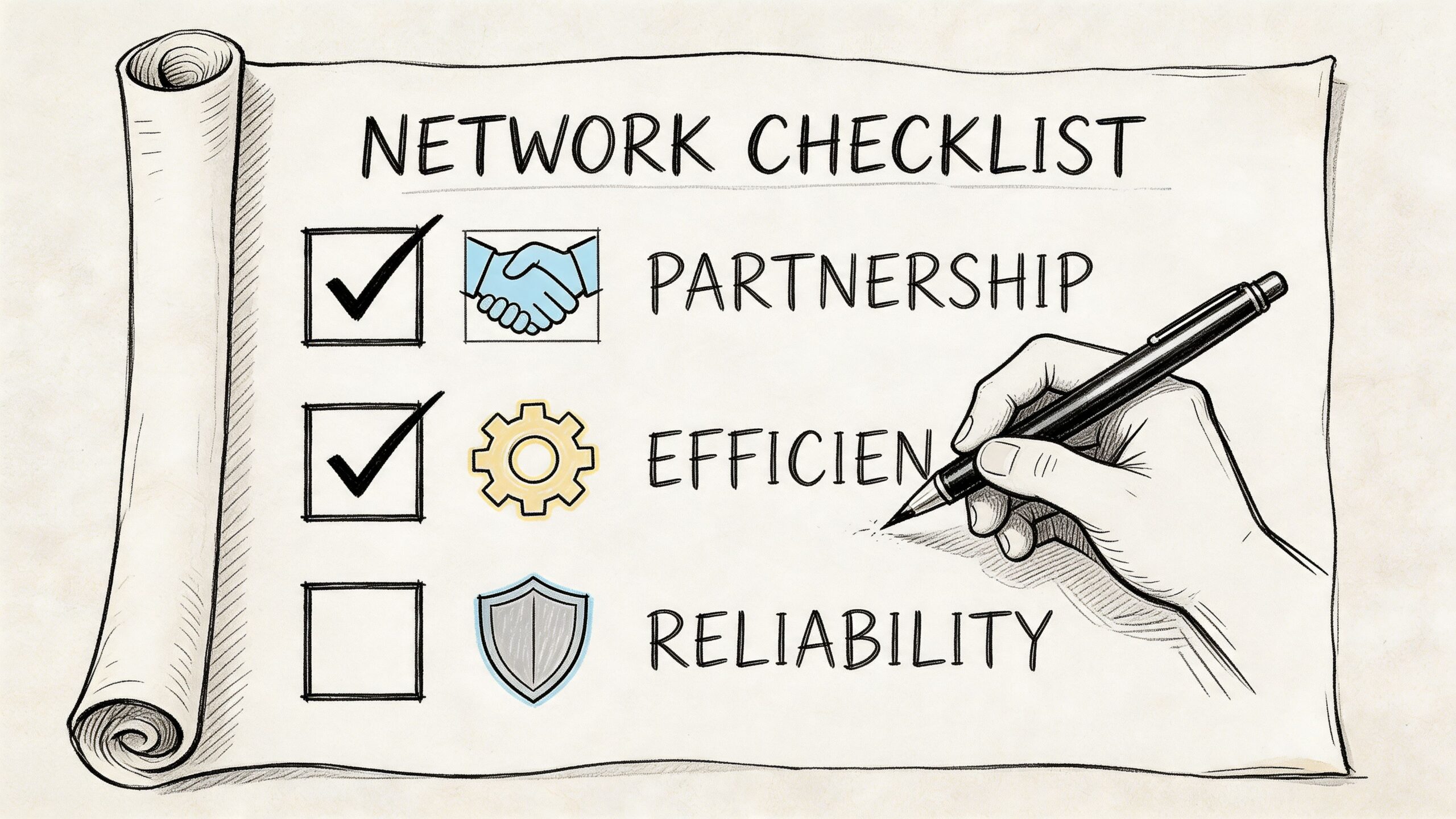
Choosing a certified contractor network is an operational decision. You are selecting a field partner that will affect cycle time, inspection quality, temporary protection, and the policyholder experience under pressure. A polished pitch matters far less than repeatable performance on bad days.
Coverage and capability
Start with where the network can perform, not just where it says it has members. A national map means little if your catastrophe zone has only a few active contractors or no depth in the trades you need.
Ask direct questions:
- Geographic depth: Where does the network have active, available contractors today?
- Surge capacity: What happens after a hailstorm or hurricane when assignment volume jumps?
- Trade coverage: Which trades are staffed and managed, and which are only referral relationships?
- High-risk work: Can contractors handle steep roofs, multi-story elevations, and restricted-access inspections safely?
Weak networks usually become apparent. They may be adequate for ordinary replacement work but struggle when a file involves emergency dry-in, interior mitigation, roofing damage, exterior collateral damage, and electrical concerns on the same loss.
Quality and vetting
The word “certified” needs a written definition. If a network cannot explain its entry standards, ongoing reviews, and removal process, the certification has little value in a claims setting.
A useful evaluation looks like this:
| Question | Why it matters |
|---|---|
| How are members vetted? | Reduces the chance of poor field performance |
| What training is required? | Shows whether standards are maintained over time |
| What documentation format is expected? | Affects adjuster review time and file quality |
| How are complaints handled? | Shows whether accountability exists after onboarding |
Ask for specifics. License verification, insurance tracking, safety expectations, photo standards, and response-time requirements should all be spelled out. General answers usually mean loose controls.
Workflow and claims integration
Often, many buyers make a bad decision. Some networks are built to help contractors grow their sales operations. That is not the same as supporting an insurance claim from first notice through inspection, documentation, approval, and repair.
Ask to see the actual claims protocol. What does the contractor collect on the first visit? How are steep roof findings documented? What photo set is required for storm damage? How are temporary repairs recorded so the adjuster can act without asking for a second trip?
RoofersCoffeeShop’s directory discussion of Certified Contractors Network is a reminder to look past branding and examine how the program functions in practice. In claims work, the difference shows up fast. A network that lacks standards for field documentation, jobsite safety, and communication will slow the file down, even if its contractors are good at retail sales.
Field discipline often shows in small details. Contractors who arrive identified, visible, and prepared usually follow stronger site procedures overall, including use of breathable safety T-shirts for construction and field operations. The shirt itself is not the point. The point is whether the network expects consistent jobsite habits or leaves everything to the individual contractor.
Partnership quality
The final check is what happens after the contract is signed. Good network partners do not disappear into an intake portal. They manage escalations, correct poor performance, and help keep files moving when the job becomes complicated.
Ask who owns dispute resolution. Ask how contractor scorecards are reviewed. Ask what happens when a contractor misses service standards, submits weak documentation, or creates avoidable policyholder friction.
A network partner should lower oversight demands, shorten handoff delays, and reduce preventable rework. If it adds another layer you have to chase, it is not a strategic asset.
When claims involve steep roofs, storm damage, tree impacts, or urgent mitigation, execution in the field drives everything that follows. Fox Claims Consultants LLC supports carriers, adjusters, and property owners with nationwide property inspection services, ladder assist, emergency response, detailed photo documentation, and safety-focused evaluations built for difficult structures and time-sensitive losses. If you need a field partner that helps move claims forward with clear reporting and dependable site support, Fox Claims Consultants LLC is ready to help.
Leave a Reply