
When your roof is breached by a storm, fire, or a falling tree, the clock starts ticking. Emergency roof tarping is the immediate first aid your property needs—a professional, temporary solution designed to stop water intrusion in its tracks and prevent a bad situation from getting catastrophically worse. It's the critical first step in loss mitigation, protecting your property until permanent repairs can be made.
Your First Line of Defense Against Storm Damage
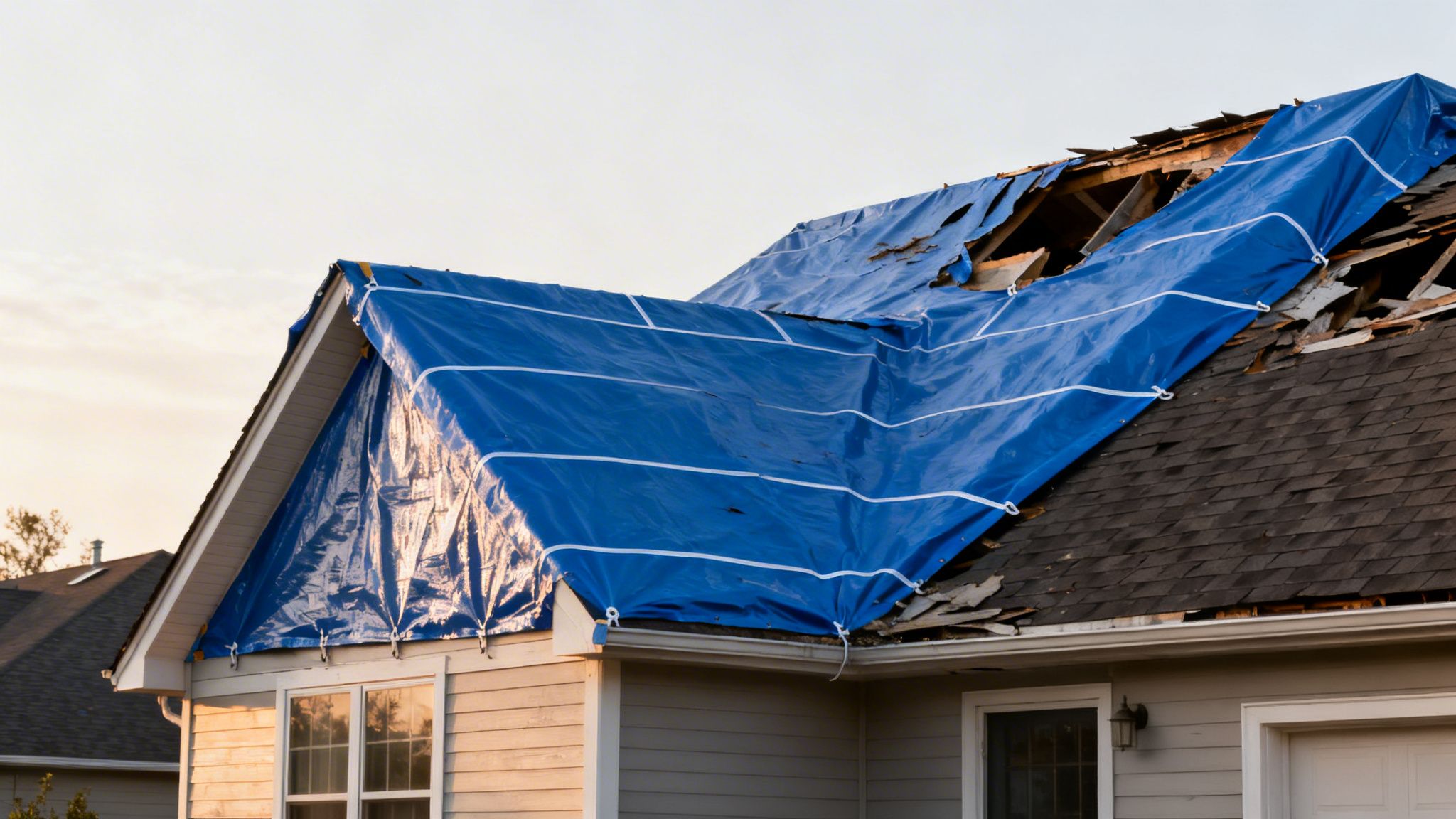
Think of your roof as the shield protecting everything inside a home. Once that shield is compromised, you need a rapid-response solution. That's where an emergency roof tarping service comes in. This is far more than just laying a plastic sheet over a hole; it's a specialized process designed to properly secure a home against further harm.
This service acts as a crucial buffer between the initial damage and the final repair. After a major event like a hurricane or hail storm, it can take days or weeks to get a roofer scheduled for a permanent fix. In that time, the property is exposed to rain and wind. A professionally installed tarp becomes a tough, temporary roof, buying everyone invaluable time.
When Is Emergency Tarping Absolutely Necessary?
Not every missing shingle is a crisis, but some situations demand immediate action to stop a small problem from turning into a huge financial headache. You need to call for emergency roof tarping services the moment you see:
- Significant Punctures or Holes: If a tree branch punched through the roof or high winds tore off an entire section, it needs to be covered. Immediately.
- Widespread Shingle Loss: When you can see large patches of the underlying wood decking, the roof is an open invitation for water damage.
- Structural Damage: Any event that compromises the roof's structure, like a fallen tree, requires immediate tarping after a structural assessment.
- Active Leaks: Water stains on a ceiling or dripping in an attic means the damage is already happening. Tarping stops it from escalating.
The urgency here can't be overstated. Mold can start to grow within just 24 to 48 hours of water exposure. Waiting to address a roof leak isn't just a risk—it's a countdown to more expensive problems like mold remediation and major structural repairs.
More Than Just a Tarp
The term "tarping" sounds simple, but the professional service is anything but. A true professional service includes a critical damage assessment, thorough documentation for the insurance claim, and specialized techniques to anchor the tarp so it holds up against the elements. They use thick, industrial-grade materials meant to withstand wind and rain for weeks, not days.
Ultimately, this service is a strategic move. It protects the home's structural components, salvages personal belongings, and shows the insurance carrier that you've taken the right steps to mitigate further loss. Taking this proactive step is often essential for a smooth and successful claim.
The Real Cost of Waiting to Tarp Your Roof
After a storm, the last thing anyone wants is another bill. So when you see a quote for emergency roof tarping services, it’s natural to hesitate. But thinking of a professional tarp as just another expense is one of the costliest mistakes you can make.
A tarp isn't a bill; it's a high-return investment. It’s the single most important step you can take to stop a bad situation from becoming a financial catastrophe.
Delaying this crucial step is like leaving your front door wide open during a downpour. The initial storm damage is just the opening act. The real disaster comes from the secondary damage caused by water pouring into the property.
The Financial Downpour of Delay
Every hour you wait to cover a damaged roof, the potential costs multiply. Water doesn't just drip; it seeps into insulation, runs down wall cavities, and pools above ceilings, starting a chain reaction of expensive problems.
This "financial downpour" quickly dwarfs the initial cost of a tarp.
Consider what even a small, unattended leak can do in just a few days:
- Saturated Insulation: Once wet, insulation is useless. It loses its R-value and becomes a perfect breeding ground for mold. The cost to tear it out and replace it can run into the thousands.
- Damaged Drywall and Ceilings: Water stains are just the visible symptom. Behind the paint, the drywall is weakening, leading to sagging, collapses, and extensive interior repairs.
- Structural Wood Rot: The wooden joists and decking that make up the skeleton of the home are extremely vulnerable. Ongoing moisture leads to rot, which can compromise the entire structure and trigger major, expensive repairs.
Waiting turns a straightforward roofing claim into a complex, multi-trade restoration project with a much, much higher price tag.
Understanding Emergency Tarping Prices
Yes, emergency services come at a premium. That price reflects the reality of the situation: the urgency, the risk of working on a wet and unstable roof, and the logistics of deploying a crew immediately, often after hours.
That premium isn’t just an upcharge; it reflects the immediate value of stopping catastrophic loss in its tracks.
Nationally, emergency roof tarping can range from $1 to $2.80 per square foot, including materials and labor for an urgent job. These services are often around 30% pricier than scheduled, non-emergency work. For instance, a standard hourly rate of $100 might jump to $130-$150 per hour for an emergency call.
A 1,000-square-foot steep roof might cost $1,800 to $2,800 to tarp in an emergency. That seems high, until you realize a single claim for mold remediation can average between $15,000 and $30,000.
The Cost of Inaction Quantified
Let’s put the numbers side-by-side. When you delay, you aren't saving money; you're gambling with much larger figures. A professional tarping service prevents problems that are not only expensive but incredibly disruptive.
Here’s what you pay for versus what you risk:
| Preventative Action (Tarping) | Consequence of Inaction (Secondary Damage) |
|---|---|
| Emergency Tarping Fee: $400 – $2,800 | Mold Remediation: $15,000 – $30,000+ |
| Structural Wood Repair: $5,000 – $25,000+ | |
| Interior Drywall & Paint: $2,000 – $10,000 | |
| Ruined Personal Belongings: Potentially priceless and irreplaceable | |
| Electrical System Repairs: $1,500 – $5,000 |
When you see it laid out like that, the choice is clear.
Paying for immediate, professional emergency roof tarping services is the most powerful cost-control measure you can take after a storm. It’s the action that separates a manageable repair from a financial nightmare. Whether you suspect hail or wind damage, you can learn more about identifying the signs of hail damage on your roof in our detailed guide.
How Professional Roof Tarping Actually Works
When your roof is damaged and water is pouring in, seeing an emergency crew arrive is a massive relief. But what really happens between that first desperate phone call and getting a secure tarp in place? It's not as simple as throwing a blue sheet over a hole.
Professional emergency roof tarping services are a disciplined, safety-first operation. The goal is to protect your property from further damage while meticulously documenting everything for your insurance claim. Think of it less like a quick fix and more like a tactical mission to secure a vulnerable asset.
The Initial On-Site Assessment
The first thing a professional crew does is assess the scene from the ground. Before anyone even thinks about climbing a ladder, they're looking for hidden dangers. Safety is always priority one.
This critical first look involves spotting hazards a homeowner might miss:
- Structural Instability: Is the roof sagging? Are trusses or rafters broken? The team has to be sure the structure can even support their weight.
- Electrical Hazards: Downed power lines or a damaged electrical mast are immediate stop signs. No work begins until the area is confirmed to be safe.
- Slippery or Unstable Surfaces: A roof covered in wet leaves, algae, or storm debris is treacherous. The crew needs to plan for the right safety gear, like harnesses and fall protection.
Only after the site is declared safe does the actual work on the roof begin. This safety protocol is what separates a professional service from a risky DIY attempt.
Comprehensive Damage Documentation
Before a single shingle is moved, the crew turns into a team of forensic photographers. Their mission is to create an undeniable visual record of the damage exactly as they found it. This step is one of the most valuable parts of the entire service for your claim.
Using high-resolution cameras—and sometimes drones for a bird's-eye view—they capture everything:
- Wide shots to show the overall context of the damage.
- Medium shots to focus on specific areas of missing shingles or punctures.
- Close-ups that detail impact points, lifted flashing, and other crucial evidence.
This detailed documentation is non-negotiable. It creates the baseline evidence for your claim, proving the damage was caused by the storm and showing you took immediate, responsible steps to prevent it from getting worse.
Debris Removal and Site Preparation
With the damage fully photographed, the team starts clearing the area. This isn’t just about tidying up; it's about preparing the surface so the tarp can form a truly watertight seal.
Crews will carefully remove loose shingles, branches, and any other debris. They’ll also look for sharp objects like exposed nails or splintered wood that could tear the tarp from below. You need a clean, smooth surface for an effective installation.
Secure Tarp Installation and Anchoring
This is where true professional skill comes into play. The crew uses a thick, commercial-grade polyethylene tarp—far tougher and more UV-resistant than anything you'd find at a hardware store. They cut it to size, making sure it extends at least four feet beyond the damaged area on all sides for total coverage.
The infographic below shows exactly why speed and proper technique are so critical.
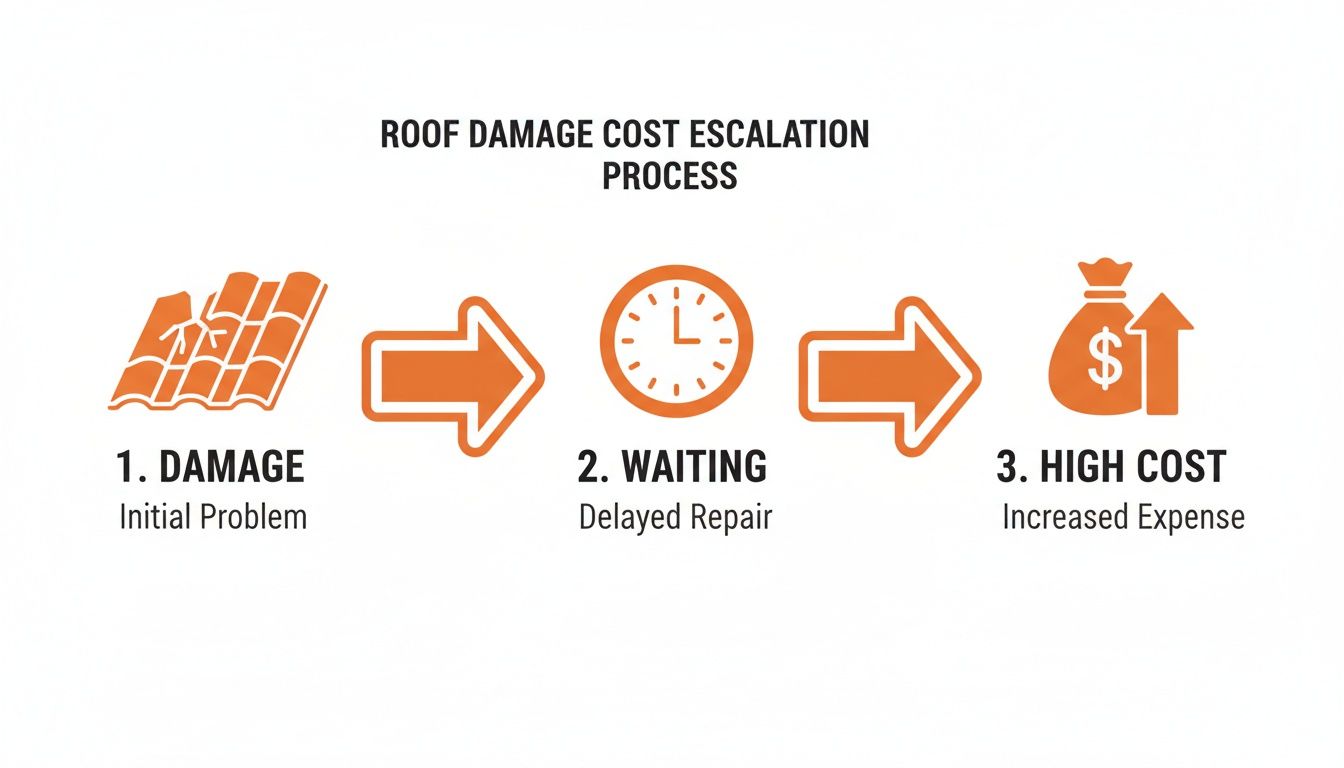
As you can see, the gap between the initial damage and professional mitigation is where small problems turn into expensive secondary damage.
A professional crew will never nail a tarp directly to your roof—that just creates more holes to fix later. Instead, they use a proven anchoring system. They lay wooden planks (furring strips) over the tarp's edges and drive specialized, corrosion-resistant screws through the boards and into the solid roof decking beneath.
This method spreads the tension evenly and prevents wind from getting underneath and ripping the tarp off. It creates a temporary roof that's built to last for weeks, not just days.
The Professional Tarping Process at a Glance
To bring it all together, here’s a simple checklist of what you can expect from a professional roof tarping service. Each step is designed to protect both the property and the integrity of the future insurance claim.
Professional Roof Tarping Service Checklist
| Phase | Key Actions | Purpose for Insurance Claims |
|---|---|---|
| 1. Dispatch & Arrival | Rapid deployment of a trained crew. Initial contact with the property owner. | Documents the response time and confirms immediate action was taken to mitigate loss. |
| 2. Safety Assessment | Ground-level inspection for electrical, structural, and surface hazards. | Establishes that all work was performed safely and professionally, reducing liability. |
| 3. Initial Documentation | High-resolution photos and/or drone footage of all storm-related damage before any work begins. | Provides unbiased, time-stamped evidence of the "as-is" condition for the adjuster. |
| 4. Surface Preparation | Careful removal of loose debris, branches, and sharp objects from the damaged area. | Shows that proper steps were taken to ensure the tarp's effectiveness and longevity. |
| 5. Tarp Installation | Securing a heavy-duty tarp using the furring strip and screw method, ensuring full coverage. | Justifies the cost and method as an industry best practice for effective mitigation. |
| 6. Final Documentation | Photos of the completed tarp job, a detailed report, and a clear invoice for services rendered. | Provides the carrier with a complete package of evidence needed to process the claim. |
This methodical approach ensures nothing is missed. When the job is done, you’ll receive a final report and invoice, giving you everything you need for a smooth and successful claims process. You can learn more about our other rapid emergency services for property claims and how they support both homeowners and adjusters through storm chaos.
Why DIY Roof Tarping Is a Costly Mistake
When a storm rips a hole in your roof, your first instinct is to act fast. That’s the right instinct.
But the impulse to grab a blue tarp from the hardware store and climb up there yourself? That’s where a manageable problem spirals into a disaster. DIY roof tarping is a huge gamble with both your safety and your property.
Before you even think about putting a ladder against the house, you need to understand one thing: a storm-damaged roof is not the same roof you cleaned the gutters on last fall. It’s now an unstable, unpredictable, and dangerous surface.
The Overlooked Dangers of a Damaged Roof
The most obvious risk, of course, is a fall. A wet roof littered with debris and missing shingles is an accident waiting to happen. A simple slip can cause a life-altering injury. But the dangers run much deeper than that.
Hidden Structural Weakness: What you see on the surface is only part of the story. The underlying decking could be completely waterlogged and soft, ready to give way under your weight.
Electrocution Hazards: Are there downed power lines nearby? If so, they can easily energize metal gutters and flashing, creating a deadly electrical hazard you’ll never see coming.
Physical Strain: Trying to manage a heavy, unwieldy tarp on a steep, windy roof is a recipe for injury. It takes serious strength and know-how to control it without getting hurt.
These are the exact reasons emergency roof tarping services exist. Professionals use specialized safety equipment and follow strict protocols because they are trained to spot and navigate these hazards.
A professional crew knows how to assess the roof's integrity before putting a single boot on it. That initial safety check is a step most homeowners are completely unequipped to perform, and skipping it can have devastating consequences.
When Good Intentions Lead to Worse Damage
Even if you manage to avoid personal injury, an amateur tarp job rarely does what it’s supposed to: keep the water out. In fact, it often makes the water damage much, much worse.
A poorly secured tarp can catch the wind like a sail, ripping loose and leaving the roof exposed all over again. More often, it’s installed in a way that traps water. Instead of shedding rain, the tarp sags, creating pockets that funnel water directly into other vulnerable parts of your home.
Improper anchoring is another classic mistake. Nailing a tarp directly through the shingles creates dozens of new holes for water to pour through. Professionals use a specific furring strip method that secures the tarp tightly without creating new points of failure. It’s a technique that provides a watertight seal designed to hold up against wind and rain.
As weather patterns intensify, the need for a professional response is only growing. The increasing frequency of storms is driving demand for emergency roof tarping services, especially in storm-prone areas. For adjusters and homeowners, a professional, photo-documented tarp installation is critical for a defensible claim and effective loss mitigation, which saves billions globally. You can learn more about the market trends in emergency roofing services.
Ultimately, hiring a professional isn’t a luxury—it’s a necessity. They have the right materials, the right techniques, and the critical safety training to protect your home without risking your life.
Getting Your Insurance Claim Right with Solid Proof
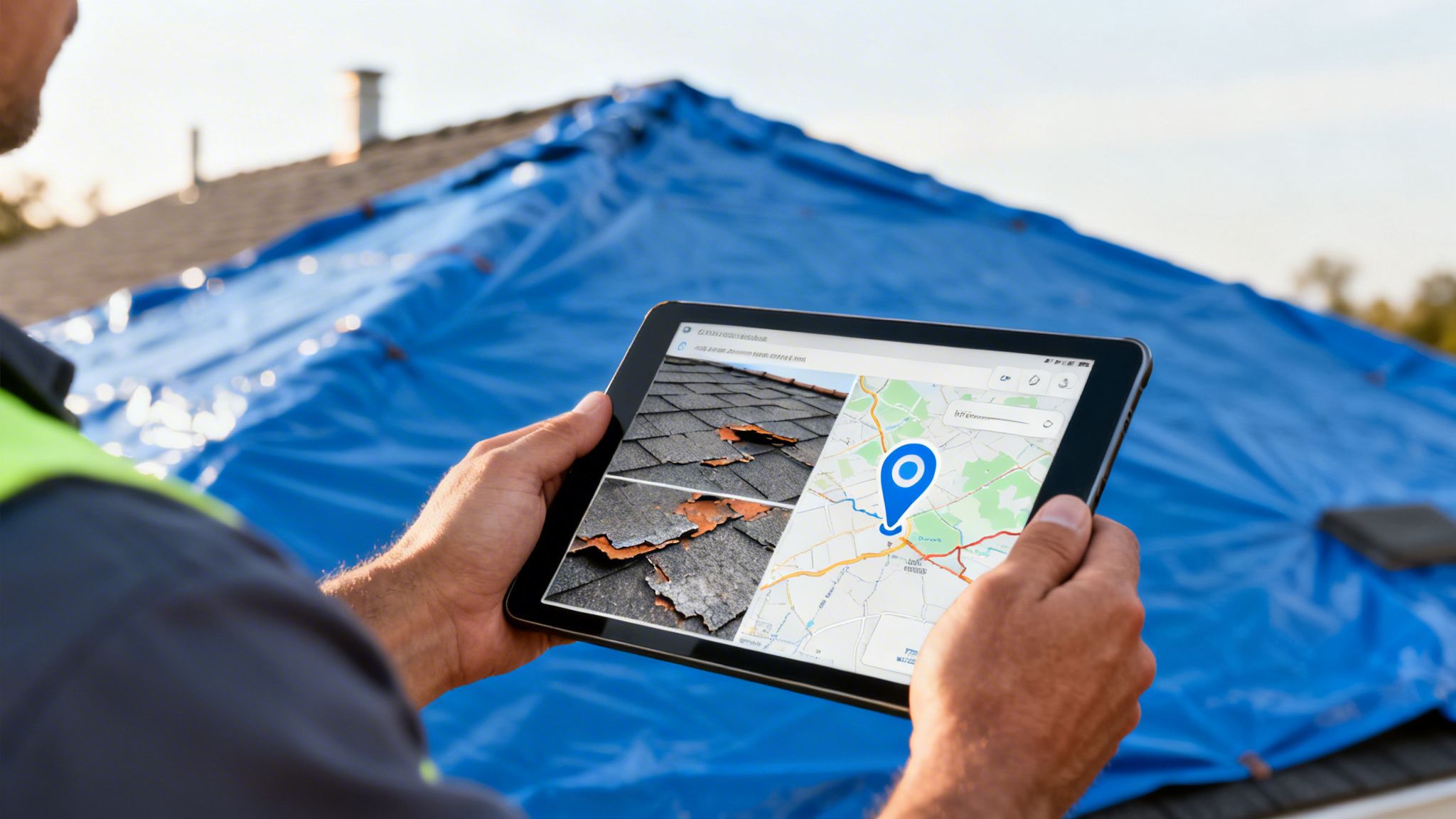
Getting that tarp on your roof is a massive relief, but it’s just step one. Step two is proving to your insurance carrier that you acted quickly and responsibly to prevent more damage. This is where professional paperwork from an emergency roof tarping services provider becomes the key to a smooth claim.
Think of it like a fender bender. You wouldn't just drive off. You’d snap photos, swap info, and get an official report. The documents you get from your tarping crew are that official report for your roof, giving the carrier everything they need to move your claim forward without a hitch.
What a Real Documentation Package Looks Like
A pro team doesn't just nail down a tarp—they build the foundation for your insurance claim. When they're done, you should have a complete file of evidence that tells the story of what happened and what you did about it. Getting this right from the start heads off a lot of questions and headaches later.
This package must include a few key things:
- Before and After Photos: This is non-negotiable. You need high-resolution, geotagged pictures showing the damage before anyone touched it, followed by photos of the professionally installed tarp.
- A Detailed Scope of Work: This report spells out exactly what was done, what materials were used (like tarp size and thickness), and which parts of the roof were covered.
- A Clear, Itemized Invoice: The bill should break down all the costs—labor, materials, and any special gear. This shows your carrier the expense was a necessary step to mitigate the loss.
This paperwork all boils down to one thing: proving you met your "duty to mitigate," a standard clause in nearly every homeowner's policy. If you can't show you took this step, you risk delays or even denials for any secondary damage that occurs.
How Good Paperwork Prevents Claim Headaches
Without solid proof, an insurance adjuster is left to guess. They might question how much of the damage was from the storm versus what happened in the days after. That uncertainty leads to endless back-and-forth, requests for more info, and frustrating delays. A complete file from your tarping service answers those questions before they're even asked.
For adjusters and homeowners alike, this makes emergency tarping an essential first move. It’s the first line of defense against secondary water damage, which can bloat claim costs by 20-50% if left unchecked. A professional firm provides the fast response and photo evidence needed to get the whole claims process moving.
The clear evidence confirms the money you spent was reasonable and necessary to stop a much bigger problem in its tracks.
How Tarping Fits Into the Big Picture
The evidence you gather during the emergency tarping phase sets the tone for your entire claim. Those initial damage photos become the baseline your adjuster uses to figure out the full scope of repairs needed. That first report is a cornerstone of your property's recovery.
Here’s how proper documentation helps:
- Validates the Initial Loss: It gives you undeniable, time-stamped proof of the storm’s impact.
- Justifies the Mitigation Cost: It shows the insurance company the tarping expense was a smart investment to protect their asset—your home.
- Speeds Up Approval: It hands the adjuster a clean, professional report, making their job easier and leading to a faster decision.
At the end of the day, a well-documented tarp job turns a chaotic emergency into a clear, managed process. It makes sure everyone—from you to the adjuster—is on the same page. When your claim is on the line, having that professional evidence is everything. If you need help navigating the claim itself, consider getting professional insurance claims assistance to walk you through it.
Your Emergency Roof Tarping Questions Answered
When your roof is damaged, you’re in a race against time and you need answers, fast. It's a stressful situation, and making the right call under pressure is tough. We get it.
This is where we cut through the noise. Here are the most common questions homeowners and property managers ask about emergency roof tarping services, with the straightforward, expert answers you need right now.
How Long Will a Professional Roof Tarp Last?
This is usually the first question on everyone's mind. Think of a professional roof tarp as a heavy-duty, temporary shield—not a permanent repair. It’s designed to buy you crucial time.
How long it holds up really comes down to a few key things:
- The Tarp Itself: A pro isn't using the flimsy blue sheet from a hardware store (usually 3-4 mil thick). We use commercial-grade, reinforced tarps, often 6-12 mil thick and treated to resist UV damage.
- The Weather: A tarp’s two biggest enemies are relentless sun and high winds. UV rays make the material brittle over time, while wind puts constant stress on the installation.
- The Installation: This is what really makes the difference. Pros use furring strips to anchor the tarp, which distributes wind load and prevents tearing. A properly installed tarp can handle some serious weather.
Under normal conditions, you can expect a professional-grade tarp to protect your property for 30 to 90 days. That window is almost always enough time to get permanent repairs scheduled and work through the insurance claim process.
But remember, it’s still a temporary fix. It's smart to check on it after any severe weather to make sure it's still holding strong.
Does Homeowners Insurance Cover Emergency Tarping?
Yes. In almost every case, homeowners insurance covers emergency tarping.
Most policies have a "mitigation of damage" clause. This means you, the homeowner, are required to take reasonable steps to prevent the problem from getting worse. Emergency roof tarping services are the textbook definition of mitigating damage.
By tarping the roof, you’re preventing a small problem from turning into a massive, expensive disaster. Insurance carriers see this as a smart move.
Think about it from their perspective: paying a few hundred or even a couple of thousand dollars for a tarp is much better than paying $15,000 to $30,000 for mold removal and structural repairs from unchecked water damage.
Your policy should cover the reasonable costs for the service, including materials and labor. Just be sure to keep every piece of paperwork—the invoice, photos, and scope of work—to submit with your claim for reimbursement.
What Is the Difference Between a Store-Bought and a Professional Tarp?
It’s easy to think, "a tarp is a tarp," but the difference between what you can buy at a big-box store and what a professional uses is massive. One is a temporary patch; the other is an engineered system designed to withstand a storm.
Let’s break it down.
A professional-grade tarp is usually 6-12 mil thick, reinforced, and UV-treated so the sun won’t bake it into a brittle mess in a few weeks. It's installed with furring strips and gasketed screws that create a seal without causing more damage. It's built to resist tearing and high winds.
Your standard store-bought tarp is thin, typically 3-4 mil, with little to no UV protection. It gets brittle and shreds quickly in the wind. People often secure them with nails or staples, which just punches more holes in the roof deck and can easily be ripped out by a strong gust.
Choosing a professional service isn't just about getting a better tarp. It's about getting a complete temporary roofing system installed by someone who knows how to secure a damaged structure against the elements.
How Fast Can a Crew Respond After a Major Storm?
When water is getting in, speed is everything. But after a major event like a hurricane, it's important to have realistic expectations.
In the first hours and days after a widespread storm, the demand for help is overwhelming. Every local contractor is slammed, and wait times can get long. This is where national response teams have a major advantage.
Here’s what affects how quickly a crew can get to you:
- The Scale of the Event: A local thunderstorm is one thing. A hurricane that hits an entire coastline is another. The bigger the disaster, the longer everyone's wait will be.
- A Company's Resources: A small local outfit might only have a handful of crews. A national provider can bring in teams from other regions to handle the surge, drastically cutting down response times.
- Accessibility: Sometimes, the crew is ready but can't physically get to you because of flooded roads, downed trees, or other debris.
A good emergency services provider will give you an honest ETA when you call. In a major catastrophe, getting a team on-site within 24 to 48 hours is considered a very fast response. That speed is critical to stop further damage and get your recovery started right.
When disaster strikes, you need a partner you can trust to respond quickly and professionally. Fox Claims Consultants LLC provides rapid-response emergency tarping services nationwide, deploying certified inspectors to secure your property and document the damage with the precision your insurance claim requires. Protect your property and streamline your claim by visiting us at https://foxclaimsconsultants.com.
Leave a Reply